


 Manage booking
Driving in Iceland in Winter: Is It Safe, and When to Get a Driver

Drive Reykjavik team · 5 min read · October 2026
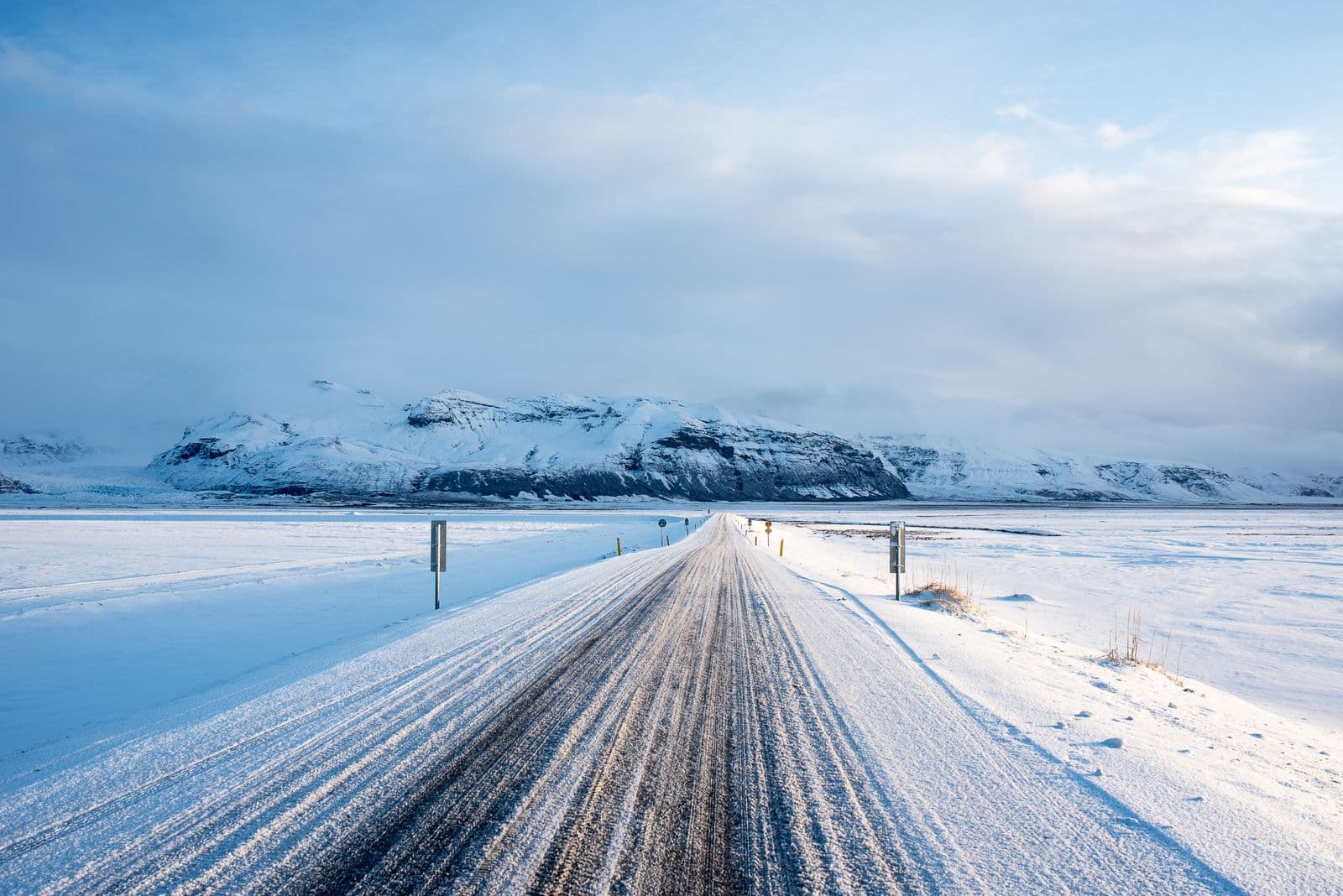
Driving in Iceland in winter is possible and many people do it every year, but it is demanding. Snow, ice, strong wind, short daylight and rapidly changing conditions can turn a simple trip into a stressful one, especially if you are used to different roads. This guide covers the main risks and the checks that matter, and it is honest about when a driver is the easier option.
What winter conditions are really like
Around Reykjavík and on the main roads, conditions are often fine, with roads cleared and treated. But outside the capital area the situation can change quickly, and the Ring Road itself can be affected by snow, ice and wind. Conditions that look easy in the morning can be very different by afternoon.
- Snow and ice: roads can be icy, even where they look clear. Black ice is hard to spot.
- Wind: gusts can be strong enough to push a car sideways, and to catch a door as you open it.
- Short daylight: in midwinter you get only a few hours of usable light, so a late start means driving in the dark.
- Limited services: fuel stations and cafés can be far apart in the countryside.
- Single-lane bridges and unfamiliar signs: they require attention when you are tired.
The checks that matter before you drive
If you decide to drive, the official sources are your friends. The Icelandic road administration publishes live road conditions at road.is, the Icelandic Met Office publishes weather warnings, and safetravel.is gives safety advice and alerts. Check them on the morning of every journey, not just once.
- Check road conditions and the weather forecast before you set off.
- Make sure the car has proper winter tyres and, if your plans go beyond the main roads, consider a vehicle suited to the conditions.
- Fill the tank early and keep it more than half full.
- Take warm clothes, water and snacks in the car, and keep your phone charged.
- Tell someone your route and expected arrival time.
- Know that 112 is the emergency number in Iceland.
Who should think twice
Winter driving in Iceland is not for everyone, and there is no shame in choosing a different way to see the country. You might want to reconsider driving yourself if:
- You have little or no experience driving on snow and ice.
- You are arriving on a long overnight flight and will be tired.
- Your trip involves long distances, such as the South Coast, in short daylight.
- You are travelling with children, or with a group that wants to enjoy the scenery rather than watch the road.
- You plan to go out in the dark, for example to look for the northern lights.
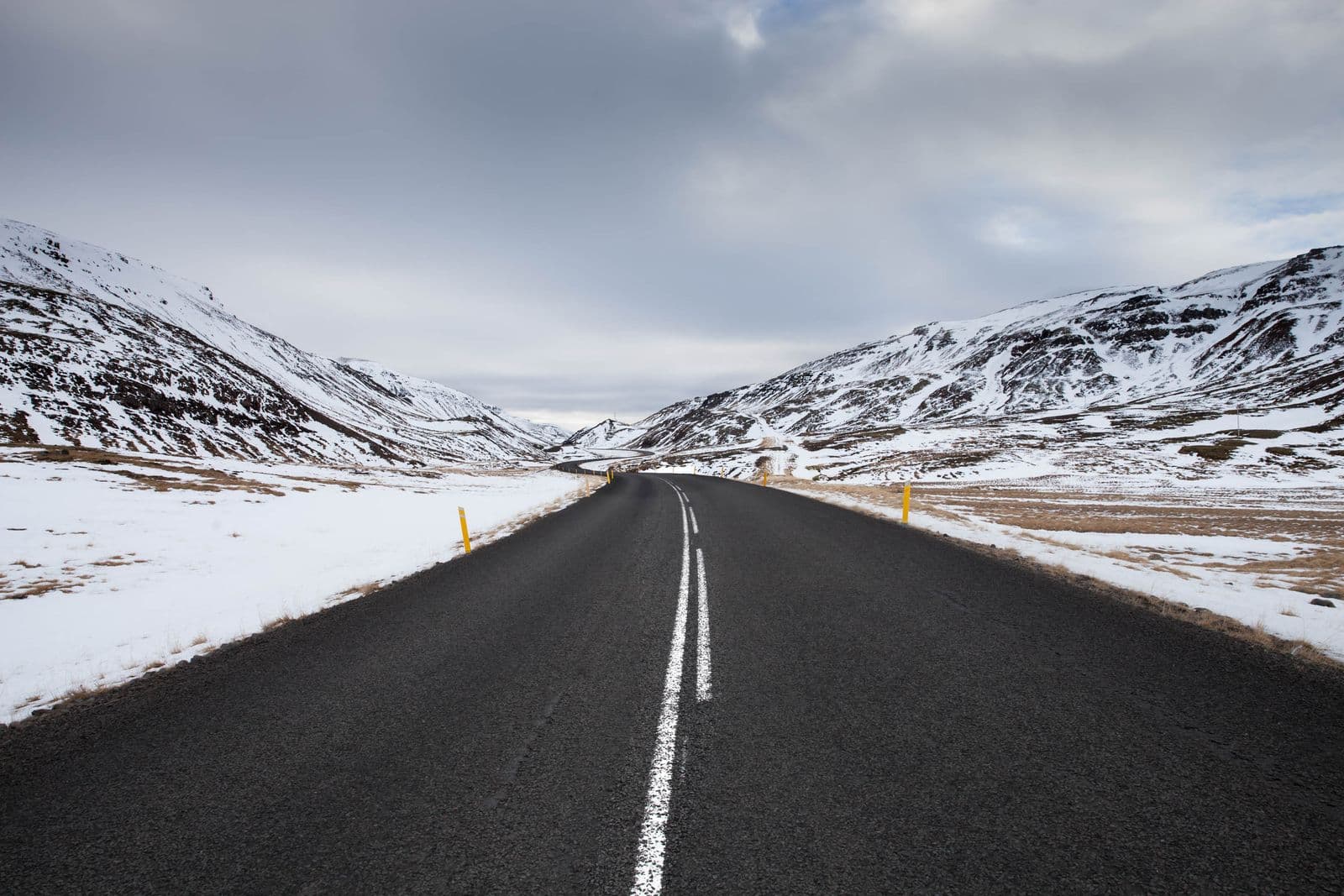
When a driver is the smarter choice
A private driver knows the roads, checks the conditions and takes responsibility for the driving, so you can look out of the window. You travel in your own vehicle, with a fixed price per car rather than per person, and you can stop where you like instead of following a coach timetable.
We offer Economy (Tesla) for 1 to 4 passengers and Van (Mercedes Vito) for 5 to 7, with a minibus for 8 to 16 on request. See all our vehicles on the fleet page. For the airport, our Keflavík to Reykjavík transfer starts from 18,900 kr per car. Your driver meets you in arrivals with a name sign, you get 45 minutes of free waiting, and you should add your flight number when you book.
For day trips, browse our private tours. Our Golden Circle guide and South Coast guide show what a winter day looks like on those routes.
Other ways to get around without a car
Winter does not have to mean driving. Reykjavík is walkable, the airport has scheduled shuttles and taxis, and tours cover most of the popular routes. Our overview of getting around Iceland without a car compares the options, and our notes on Iceland in winter explain what to expect from the season.
Whichever way you travel, be flexible. Winter plans sometimes need to change at short notice, and the best itinerary is one that can bend with the weather.
FAQ
It can be, with preparation and good judgement. Conditions change fast and daylight is short, so check road.is and the weather every morning, and be ready to change your plans.
It depends on your route and the conditions. Main roads are often fine with winter tyres, but some roads need a suitable vehicle. If in doubt, ask the rental company and check the road conditions.
Only a few hours in midwinter, and it grows quickly through January and February. Plan driving for the middle of the day.
Yes. Message us on WhatsApp at +354 777 3949 with your date and group size, and we will tell you what we can arrange.
Free cancellation is available up to 24 hours before pick-up, with a full refund. If conditions change on the day, message us and we will talk through the options.
Travel tips
More in Getting around Iceland


 Getting around Iceland
Taxis in Iceland: Prices, Apps and When a Pre-booked Transfer Is Better
How taxis work in Iceland: how fares are charged, how to order one, what to expect from the airport and when a fixed-price pre-booked transfer is the better choice.
Read more Getting around Iceland
Getting Around Iceland Without Renting a Car
You do not need a rental car to see Iceland. Compare buses, domestic flights, tours, taxis and private drivers, and see which option fits each type of trip.
Read more Getting around Iceland
Reykjavík to Akureyri: flight, bus or private transfer?
Flying, the long-distance bus, driving yourself or a private transfer: an honest comparison of the ways to get from Reykjavík or Keflavík Airport to Akureyri.
Read more