


 Manage booking
The Best Hot Springs and Geothermal Pools in Iceland

Drive Reykjavik team · 5 min read · August 2026
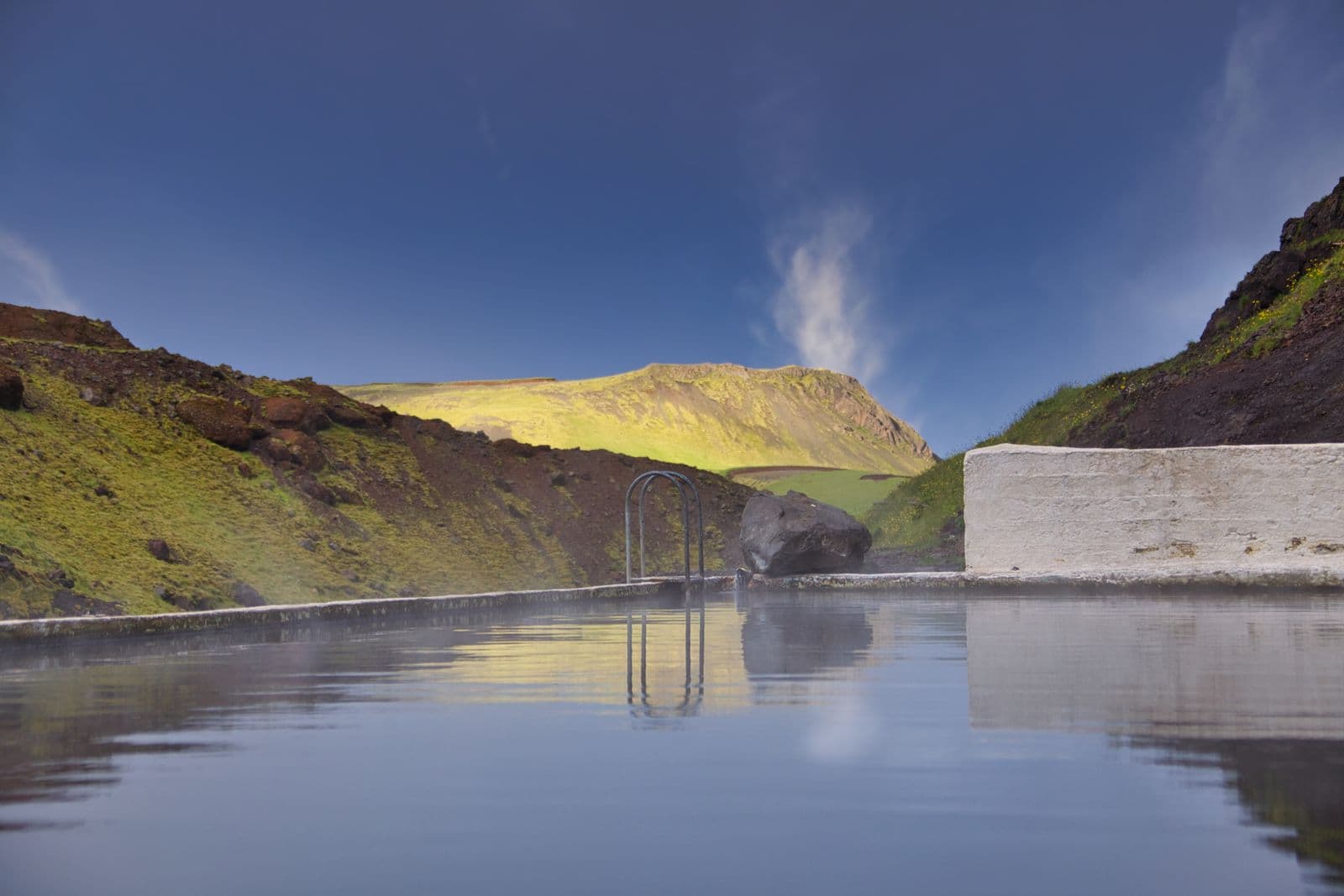
Few things say Iceland like sinking into warm water while steam drifts past and the air is cold. The hot springs in Iceland range from world-famous lagoons to simple village pools and rivers that you reach on foot. The country sits on a volcanic hotspot, so naturally heated water is part of everyday life and, for many Icelanders, a daily social habit.
This guide helps you choose between the main types, explains how to fit them into your itinerary and covers the pool etiquette that surprises many first-time visitors.
The main types of hot springs in Iceland
Not every hot spring is the same experience. Think of five broad categories, then decide which suits your trip.
- Big lagoons and spas: designed experiences with changing rooms, bars and a treatment feel, such as the Blue Lagoon and Sky Lagoon near Reykjavík.
- Smaller spa baths: often beside lakes or nature areas, for example near Laugarvatn on the Golden Circle or at Mývatn in the north.
- Historic or village pools: like the Secret Lagoon in Flúðir, a simple outdoor pool fed by a natural spring.
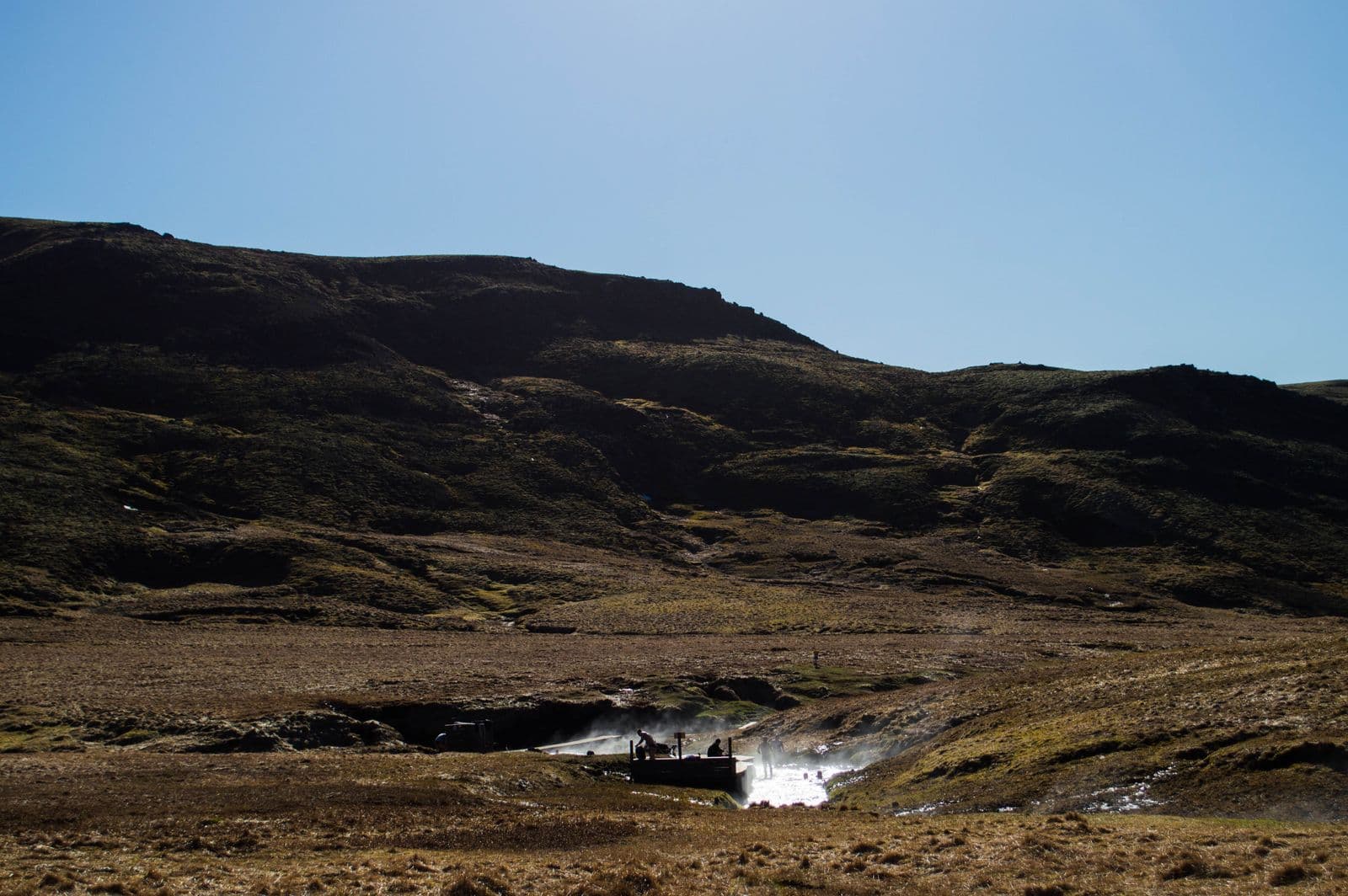
- Wild hot springs and rivers: natural spots reached on foot, such as the thermal river at Reykjadalur, where you change outdoors.
- Local swimming pools: found in almost every town, with hot tubs, steam baths and a very local atmosphere.
Hot springs near the airport and Reykjavík
If you only have a short stay, the best options are the ones close to Keflavík Airport and Reykjavík. The Blue Lagoon sits on the Reykjanes peninsula and works well as a first or last stop; our guide to Keflavík Airport to the Blue Lagoon explains the timing. In the city itself, Sky Lagoon is a seaside option, and our comparison of Blue Lagoon vs Sky Lagoon shows how they differ.
Reykjavík also has public swimming pools with hot tubs. They are cheaper and more local than the big spas, which makes them a good way to see everyday Icelandic life. Check current opening hours and entry prices before you go.
Hot springs on the Golden Circle and South
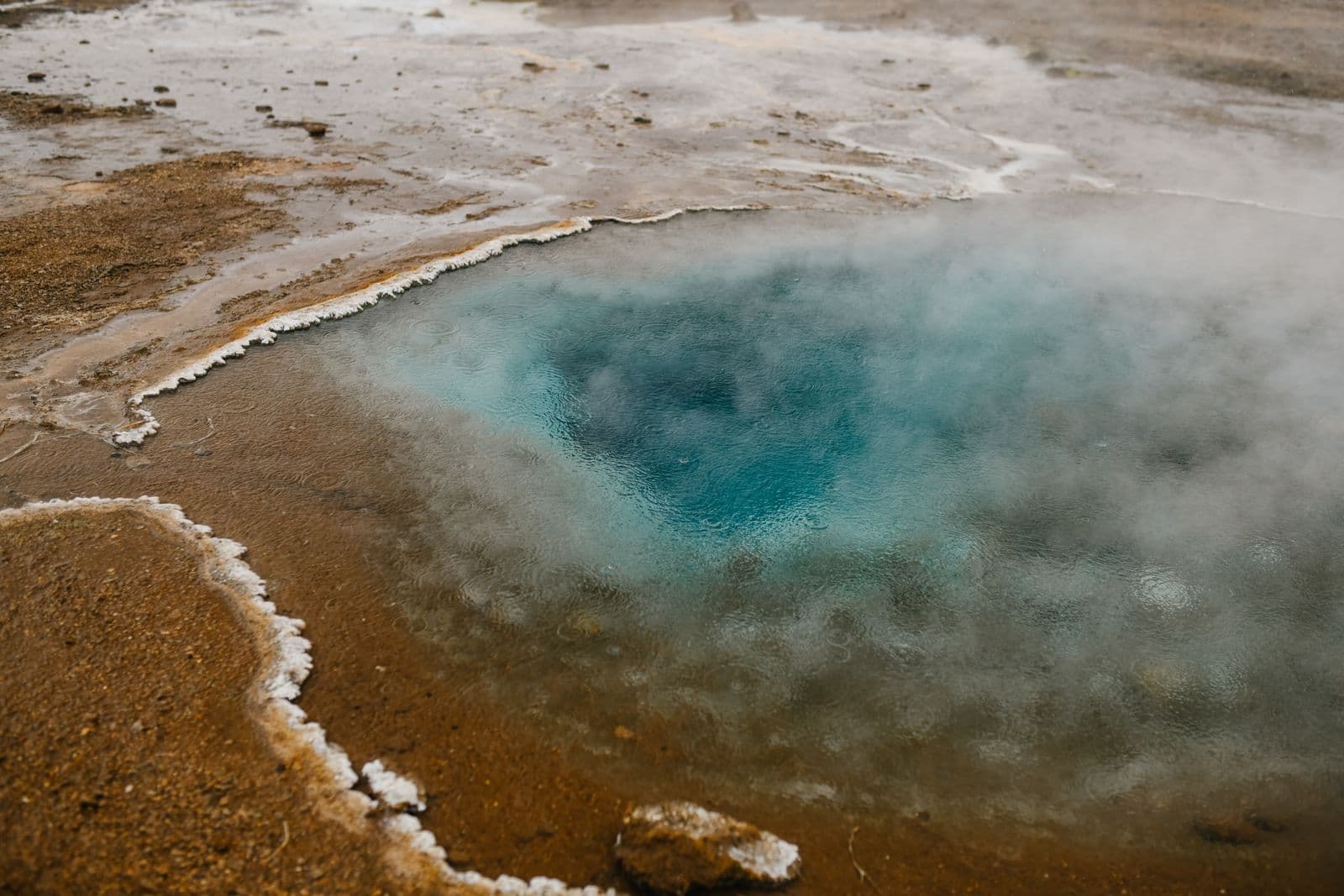
The Golden Circle is a natural place to add a soak. Around Laugarvatn and Flúðir you will find spas and pools, and the geothermal field at Geysir is a reminder of what powers it all; note that you must never bathe in the boiling springs there. Our Golden Circle guide describes the standard route, and the Secret Lagoon guide shows how to add a pool to the day.
In South Iceland, the valley of Reykjadalur near Hveragerði is known for its warm river. It is reached on foot, so allow time for the walk and bring warm clothes for afterwards. Weather matters here: dress for rain and wind.
Pool etiquette: what to know before you go
Icelandic pools have a few rules that everyone follows. Knowing them means you can relax instead of worrying about what is expected.
- Shower thoroughly without your swimsuit before entering any pool, in the designated areas. This is a hygiene rule taken seriously, and signs usually show where to wash.
- Use soap on the key areas and rinse well, then put on your swimsuit.
- Keep valuables to a minimum and use lockers where they are provided.
- Follow posted temperature signs and the lifeguards' guidance, and do not stay in very hot water for too long.
- Respect other bathers: keep noise low and phone photography discreet.
Staying safe at natural hot springs
Natural springs are not controlled like a pool, and water temperatures can change. Never assume that a pool is safe to enter. Look for signs, follow any local instructions, test the water gently with your hand and avoid boiling, bubbling or unmarked pools. Stay on marked paths in geothermal areas, since the ground can be thin and very hot beneath the surface.
- Check the weather and road conditions before heading to any remote spring.
- Wear warm, waterproof layers for the walk to and from the water.
- Bring a towel, a plastic bag for wet clothes and a warm hat for afterwards.
- Tell someone where you are going, especially in winter.
Getting to hot springs without a rental car
Many pools are not on regular bus routes, so a rental car is often assumed. If you would rather not drive, especially on winter roads, you have another option. Our private tours include your own driver and flexible timing for your group, so you can choose a Golden Circle or South Coast route and plan a soak along the way. Ask us on WhatsApp at +354 777 3949 if you want a hot spring added to your day.
If you are arriving soon, a pre-booked transfer from Keflavík Airport can take you straight to Reykjavík, or to the Blue Lagoon and on to Reykjavík with our Blue Lagoon transfer package. Prices are fixed per car, with Economy (Tesla) for 1 to 4 passengers and Van (Mercedes Vito) for 5 to 7.
FAQ
Yes. You shower without your swimsuit in the changing rooms before you enter. It is a standard hygiene rule and applies everywhere.
Those close to Keflavík Airport and Reykjavík, such as the Blue Lagoon or a city pool, fit best. Check current opening hours and book ahead where required.
No. Some are far too hot. Only enter springs that are clearly intended for bathing, and follow local signs.
For big lagoons it is usually wise. Smaller pools may not need it. Check each place's current rules and prices.
Message us on WhatsApp with your plan and we will tell you what we can arrange. We will confirm with you what is and is not included.
Travel tips
More in Places to visit


 Places to visit
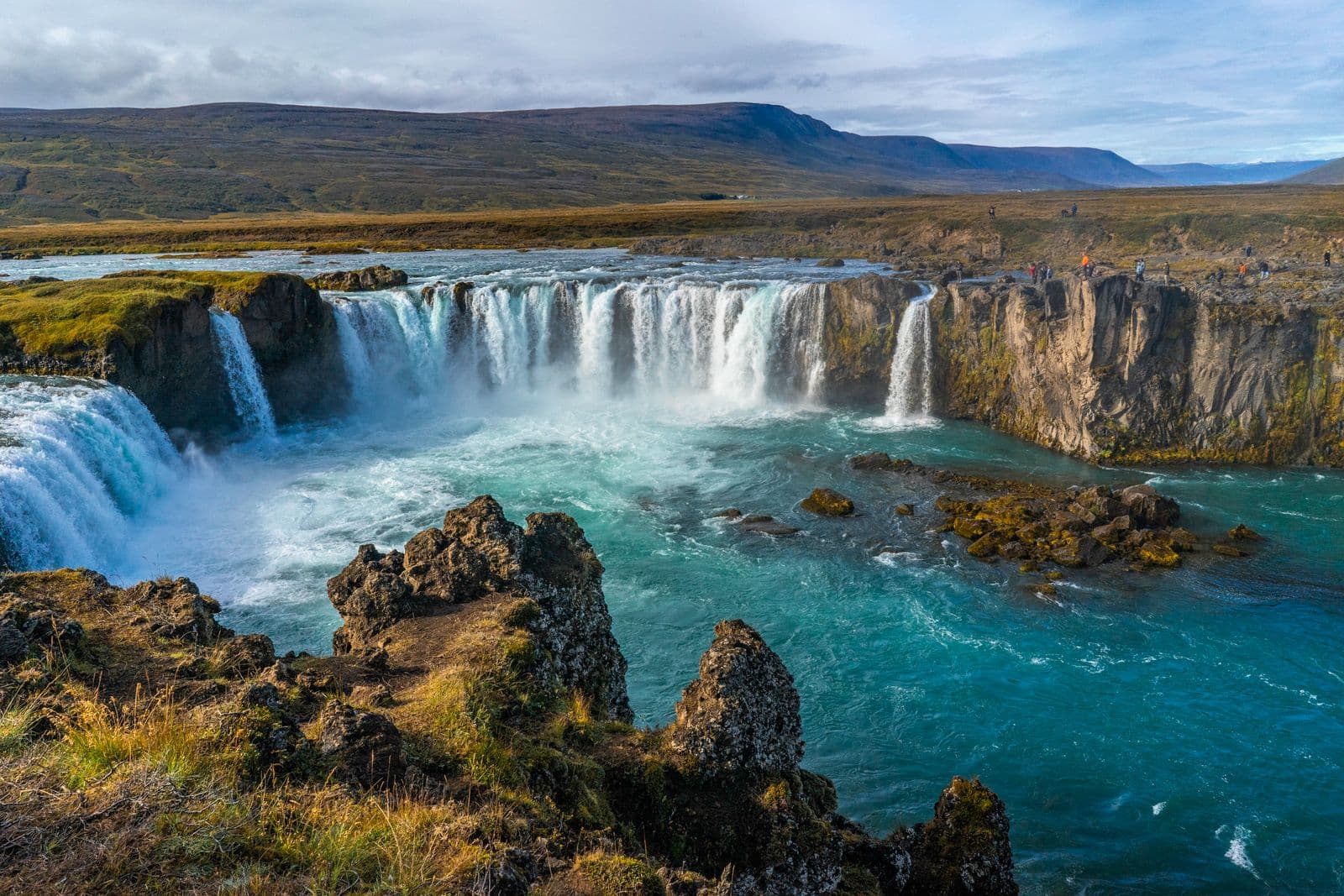
The Diamond Circle in North Iceland: Goðafoss, Mývatn, Húsavík and Ásbyrgi
North Iceland's answer to the Golden Circle: Goðafoss, Lake Mývatn, Dettifoss, Ásbyrgi canyon and Húsavík. Route, timings, seasons and how to get there.
Read more Places to visit
Interstellar, Batman Begins and Star Wars: the Iceland glaciers and beaches on screen
Svínafellsjökull glacier, the black sands near Vík and Jökulsárlón: where Interstellar, Batman Begins and Rogue One were filmed in Iceland, and how to visit.
Read more Places to visit
Game of Thrones filming locations in Iceland you can visit
Þingvellir, Grjótagjá, Dimmuborgir, Svínafellsjökull, Reynisfjara and Kirkjufell: where Game of Thrones was filmed in Iceland and how to see each place.
Read more