


 Manage booking
How to Read the Northern Lights Forecast in Iceland

Drive Reykjavik team · 5 min read · September 2026
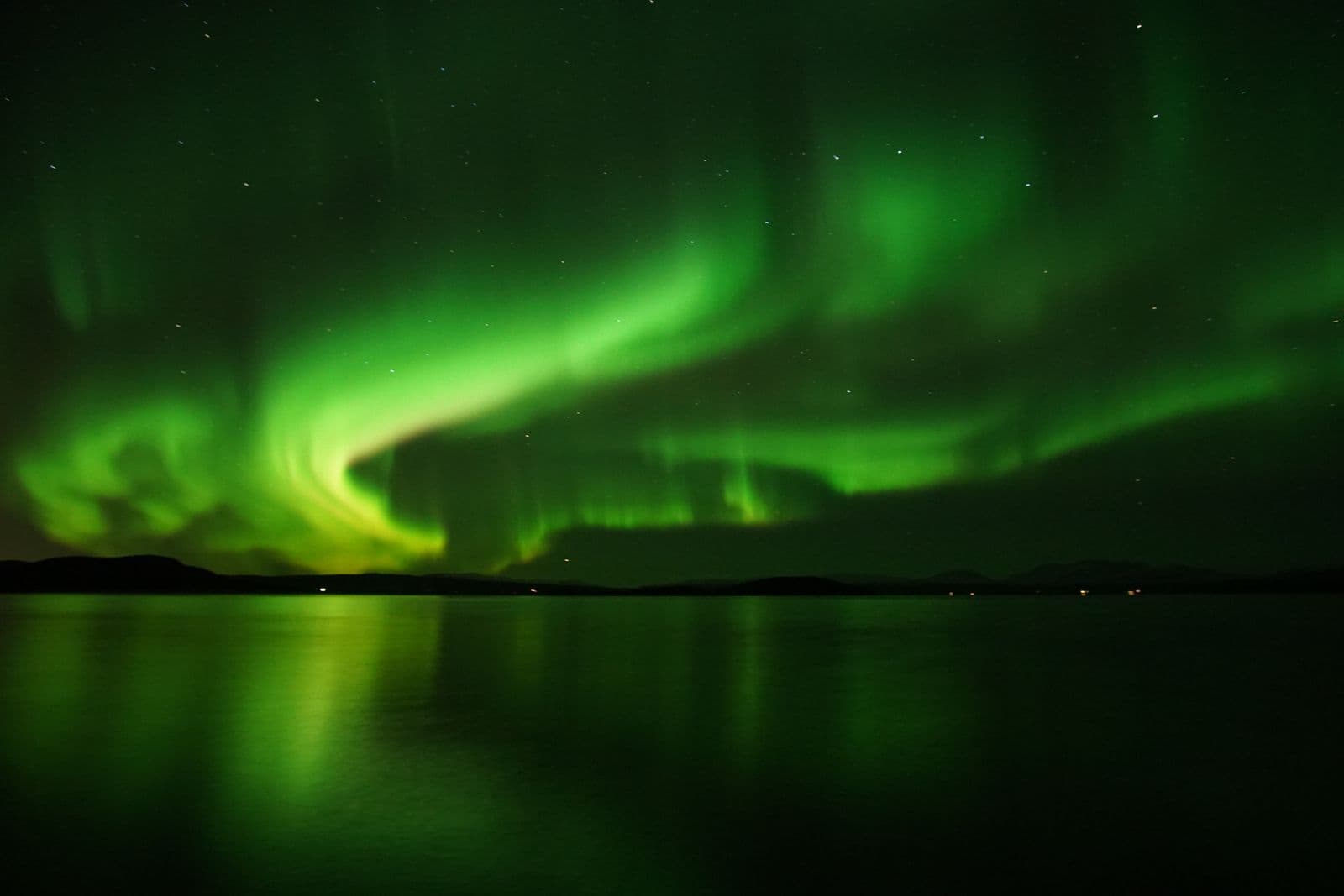
Every winter, visitors stare at their phones trying to decide whether tonight is the night. The northern lights forecast in Iceland can look confusing at first, with numbers, colour maps and warnings, but it boils down to three things: how active the aurora is, whether the sky is clear and whether it is dark enough. This guide explains how to read each part and what the forecast cannot tell you.
One honest point first: the northern lights can never be guaranteed. A forecast improves your odds, but it is not a promise.
What every northern lights forecast in Iceland tells you
- Activity: how strong the solar and geomagnetic conditions are.
- Cloud cover: you need gaps in the clouds to see anything.
- Darkness: the sky has to be dark, so the season, time of night, moonlight and light pollution all play a part.
Most disappointments come from checking only the first one. A high activity number under a thick blanket of cloud shows you nothing, while a modest number under a clear, dark sky can be spectacular.
Reading the aurora activity forecast
Aurora forecasts commonly use a scale from 0 to 9, often called the Kp index, which describes geomagnetic activity. Higher numbers generally mean the aurora is stronger and can appear further from the poles. Iceland is well placed under the auroral zone, so lower numbers can still produce good displays here, which is not true in many countries.
- Low numbers: the aurora is usually weaker and closer to the northern horizon, but it can still be visible from a dark place.
- Medium numbers: a good chance of a clear display if the sky is clear.
- High numbers: stronger activity, sometimes with the lights overhead and in several colours.
Treat the number as a guide rather than a rule. Forecasts further ahead are less reliable, and activity can change quickly, which is why short-term updates on the same evening are worth checking. The Icelandic Met Office publishes an aurora forecast for Iceland that combines activity and cloud cover, and international space weather agencies provide wider forecasts.
Cloud cover: the deciding factor
In Iceland, clouds are the main reason people miss the lights. The Icelandic Met Office provides cloud cover maps, and you are looking for areas of low or no cloud. Weather changes fast in Iceland, so the best spot may be an hour's drive from where you are staying.
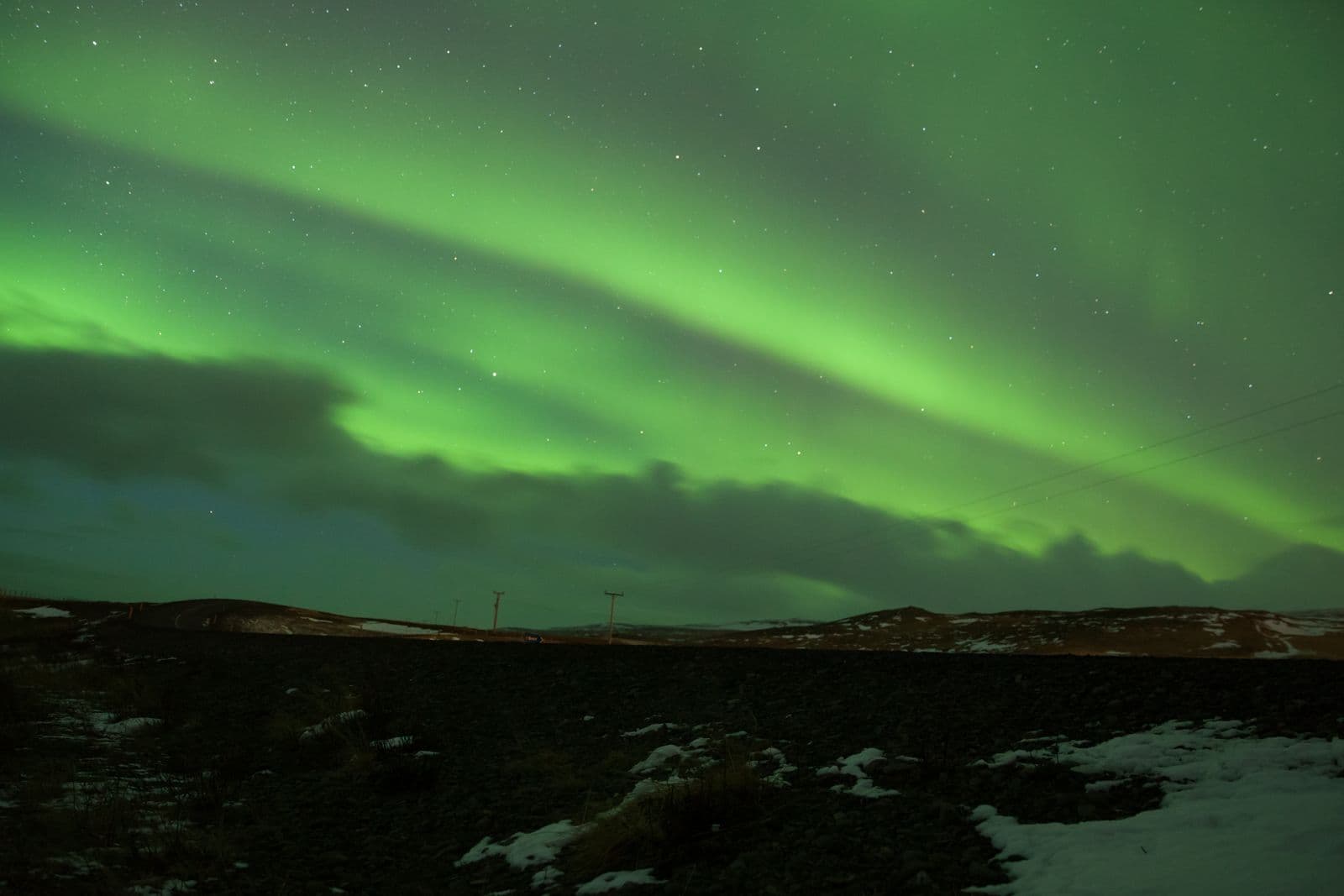
It helps to check more than one source. If the activity forecast and the cloud map both look promising, your odds are better. If they disagree, trust the cloud map for where to go and the activity forecast for how strong the display might be.
Darkness, season and the moon
The aurora season in Iceland generally runs from late summer into early spring, once nights are properly dark. Midsummer is too bright. Within the season, the hours from the evening to around midnight are common times, though displays can happen at other times too.
- Moonlight: a bright full moon makes faint auroras harder to see, though strong displays still show.
- Light pollution: move away from towns and streetlights. Even a short drive out of Reykjavík helps.
- Time: dress warmly and be patient. Auroras can come and go in waves.
For a month-by-month look, see our guide to the best time to see the northern lights in Iceland, and for the basics, read our northern lights guide.
Turning the forecast into a plan
- Check the forecast a few days ahead to see whether activity and weather are promising.
- Check again in the afternoon for cloud cover and updated activity.
- Choose a dark place with a clear northern view, or go with a driver who will choose it for you.
- Dress warmly, bring a hot drink and allow several hours.
- Keep a second evening free, because one night is rarely enough.
If you want to photograph them, see our tips on photographing the northern lights.
Finally, remember what a forecast is: a probability. A quiet forecast can still surprise you, and a perfect forecast can still be spoiled by a cloud bank that arrives at the wrong time. Treat each night as a chance rather than a certainty.
Chasing the lights with a private driver
A private tour with your own driver means no fixed meeting point and no bus full of strangers. You can wait, move or call it a night depending on the sky. Our private tours use Economy (Tesla) for 1 to 4 passengers, Van (Mercedes Vito) for 5 to 7 and a minibus for 8 to 16 on request, at a fixed price per car. Message us on WhatsApp at +354 777 3949 to ask what is possible for your dates.
FAQ
It is a scale from 0 to 9 describing geomagnetic activity. Higher numbers usually mean a stronger aurora, but in Iceland lower numbers can still produce a display under clear, dark skies.
Both matter, but cloud cover often decides whether you see anything. Strong activity under thick cloud shows nothing.
The Icelandic Met Office publishes an aurora forecast with cloud cover, and international space weather agencies provide general activity forecasts.
No. They depend on solar activity, clear skies and darkness, and no forecast or tour operator can promise them.
A car or driver helps you reach dark places and move to clearer skies. Message us on WhatsApp at +354 777 3949 to ask about a private tour.
Travel tips
More in Northern Lights


 Northern Lights
Seeing the Northern Lights in Iceland: When, Where and How
A realistic guide to the northern lights in Iceland: the season, what you need for a sighting, how to read the forecast and how to stay safe on dark winter roads.
Read more Northern Lights
The Best Time to See the Northern Lights in Iceland (Month by Month)
When is the best time to see the northern lights in Iceland? A month-by-month look at the dark season, what affects your chances and why nobody can promise a sighting.
Read more Northern Lights
How to Photograph the Northern Lights (Even with a Phone)
How to photograph the northern lights in Iceland: camera settings, phone night mode, tripods, cold-weather tips and where to stand, with realistic expectations.
Read more