


 Manage booking
The Best Time to See the Northern Lights in Iceland (Month by Month)

Drive Reykjavik team · 5 min read · September 2026
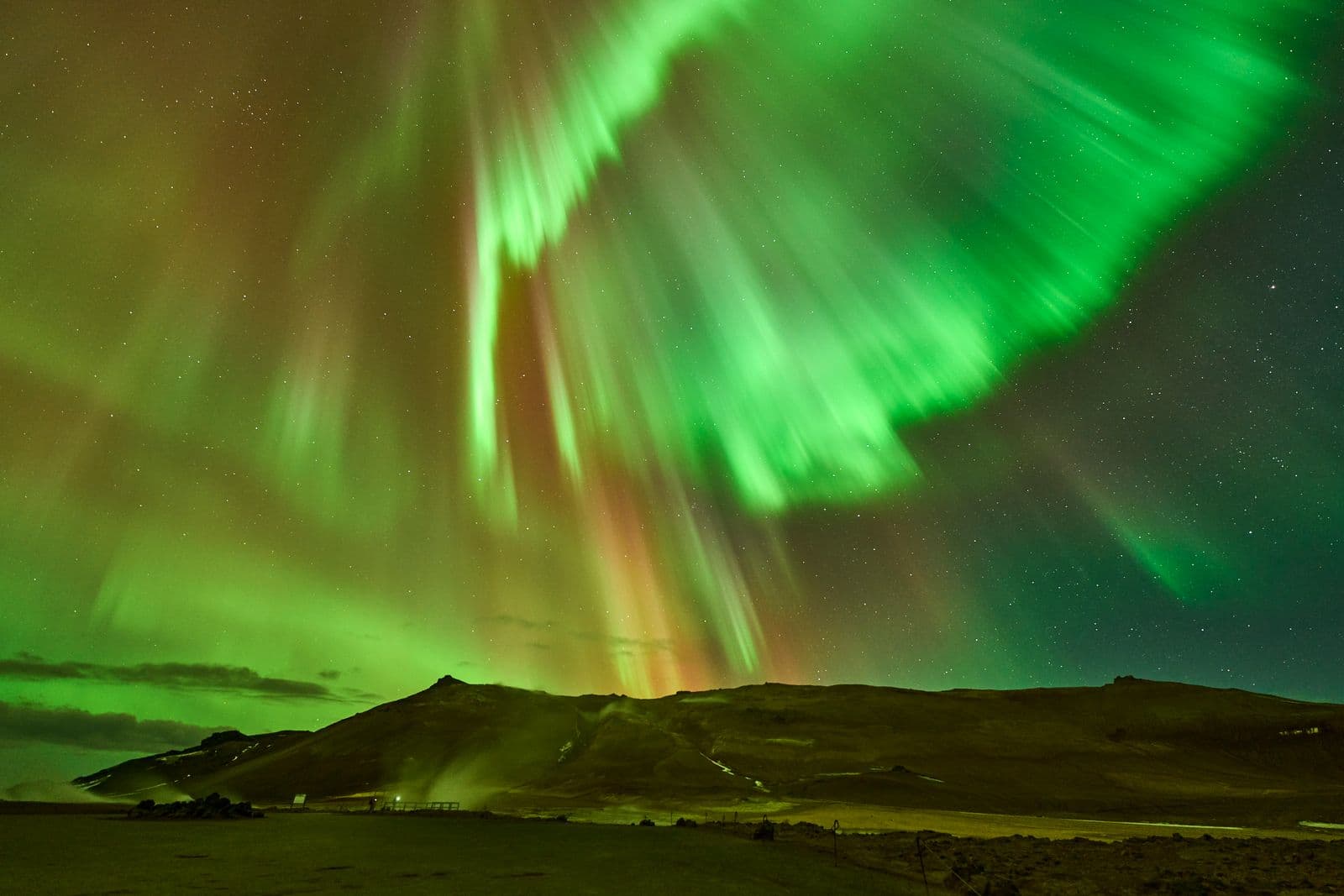
Everyone asks about the best time to see the northern lights in Iceland, and the honest answer is a range, not a date. The aurora needs two things: a dark sky and solar activity. Iceland has the darkness for roughly half the year, but the activity and the weather are up to nature, which is why nobody can ever guarantee a sighting.
This guide looks at the season month by month and explains what you can do to improve your odds.
When the season runs
The aurora is happening all year, but you can only see it when the sky is dark enough. In Iceland, that generally means from around late August or September until about mid-April. From May to July the nights are too bright, and around midsummer the sun barely sets at all.
Month by month
September and October
The season begins as nights get properly dark again, and the weather is generally milder than in midwinter. Many travellers like these months because the roads are easier, the days are still a decent length and the autumn colours are a bonus. The equinox periods are often said to bring more geomagnetic activity, though it is never a promise.
November, December and January
These are the darkest months, with the longest nights and therefore the longest windows to see the lights. They are also the months with the shortest days, the most unsettled weather and the most challenging driving. Cloud is your biggest enemy at this time of year.
February and March
Nights are still long, but daylight returns quickly, so you get a better balance of sightseeing and aurora hunting. Many people rate these months highly for that reason, and the March equinox is often mentioned for stronger activity.
April
Early April can still give you dark skies, but the nights get shorter fast. By the end of the month the window is closing, so treat April as a bonus rather than your main plan.
May to August
It is too light to see the aurora, especially from May to July. Summer in Iceland offers other highlights instead, like the midnight sun and puffins. See our guide to Iceland in summer.
What really affects your chances
- Cloud cover: clear skies matter more than the month. Check the cloud forecast, not only the aurora forecast.
- Darkness: get away from town lights, and avoid a bright full moon if you can.
- Solar activity: forecasts give you an idea, but they cannot promise anything. Our guide on how to read the northern lights forecast explains the numbers.
- Time on the ground: the more nights you spend, the better your odds. A single evening is a gamble.
Common myths about the aurora
- "It is always better when it is colder." Cold is not the cause. Clear skies and solar activity are what count.
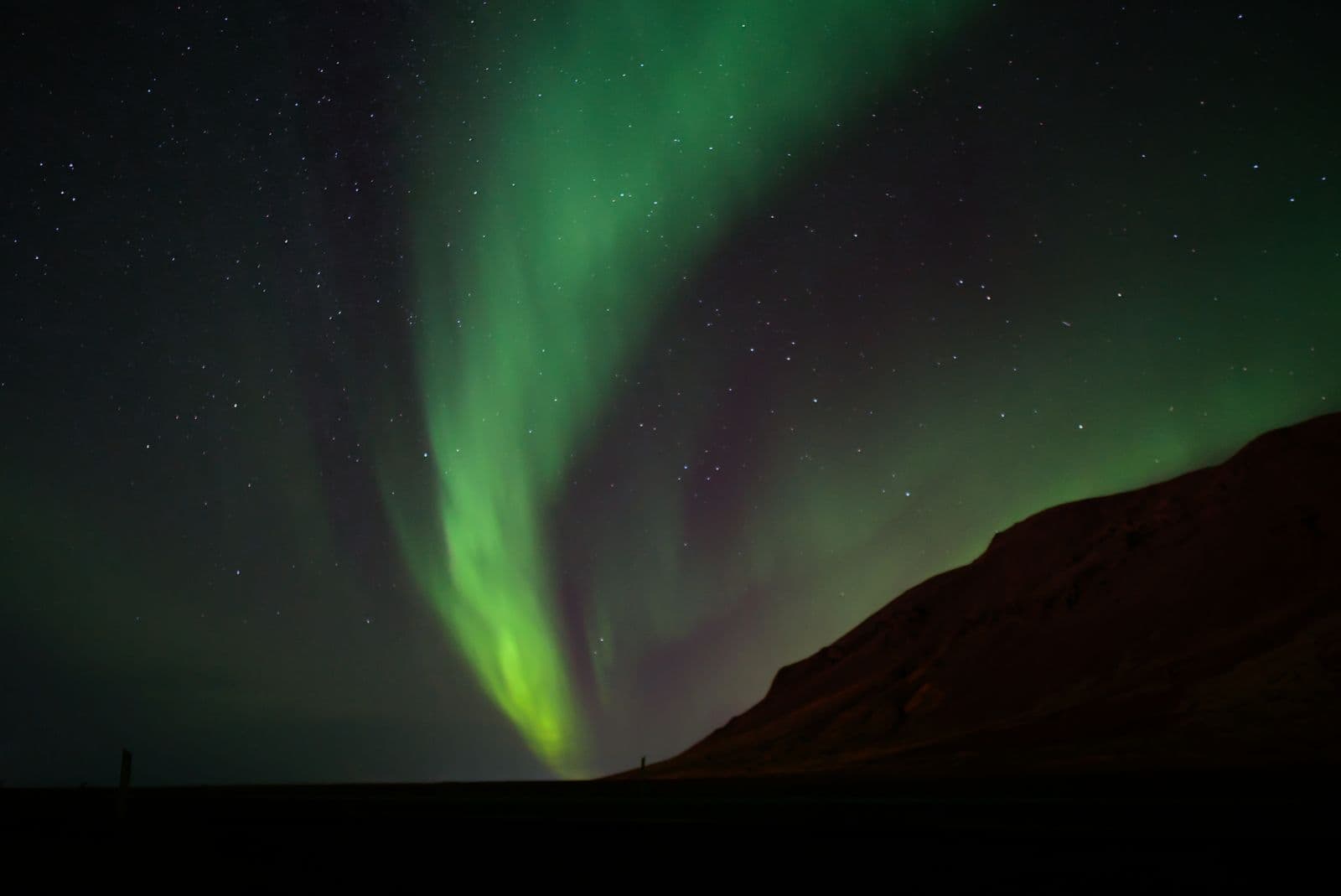
- "The lights are always green and bright." Many displays are faint to the eye and look stronger in a camera. Your phone may show more than you see.
- "There is a guaranteed best night." Forecasts help, but the aurora can surprise you in both directions.
- "You must travel far from Reykjavík." Sometimes yes, sometimes no. Darkness helps, but you do not need to cross the country.
Where and how to look
You do not have to go far. Reykjavík sits in a good latitude, and on a clear, active night the lights can sometimes be seen from the edge of town. Most people get a better view away from city lights, which is where a driver helps: they can move you to a dark spot with clearer skies, and handle winter roads in the dark.
For a full overview, read our northern lights guide. If you want to photograph the display, see our tips for northern lights photography.
Going with a private driver
With a private driver you travel in your own car or van, so you can wait, move and adjust to the conditions on the night. Economy (Tesla) takes 1 to 4 passengers and Van (Mercedes Vito) takes 5 to 7, with a minibus for 8 to 16 on request. We cannot promise the lights, because nobody can, but we can help you give yourself the best chance. Message us on WhatsApp at +354 777 3949 and we will tell you what we can arrange for your dates.
Browse our private tours for daytime plans, and read Iceland in winter to prepare for the season.
FAQ
There is no single best month. The season runs roughly from September to mid-April, and any month in that range can deliver a good night with clear skies and solar activity.
Not in practice. From May to July the nights are too bright, and the sky only starts to darken properly in late August.
No, and neither can anyone else. The aurora depends on the weather and on solar activity. Plan several nights and stay flexible.
Not always, but darker skies away from city lights give a better view.
Warm layers, a windproof outer layer, a hat and gloves. See our packing guide for a full list.
Travel tips
More in Northern Lights


 Northern Lights
Seeing the Northern Lights in Iceland: When, Where and How
A realistic guide to the northern lights in Iceland: the season, what you need for a sighting, how to read the forecast and how to stay safe on dark winter roads.
Read more Northern Lights
How to Photograph the Northern Lights (Even with a Phone)
How to photograph the northern lights in Iceland: camera settings, phone night mode, tripods, cold-weather tips and where to stand, with realistic expectations.
Read more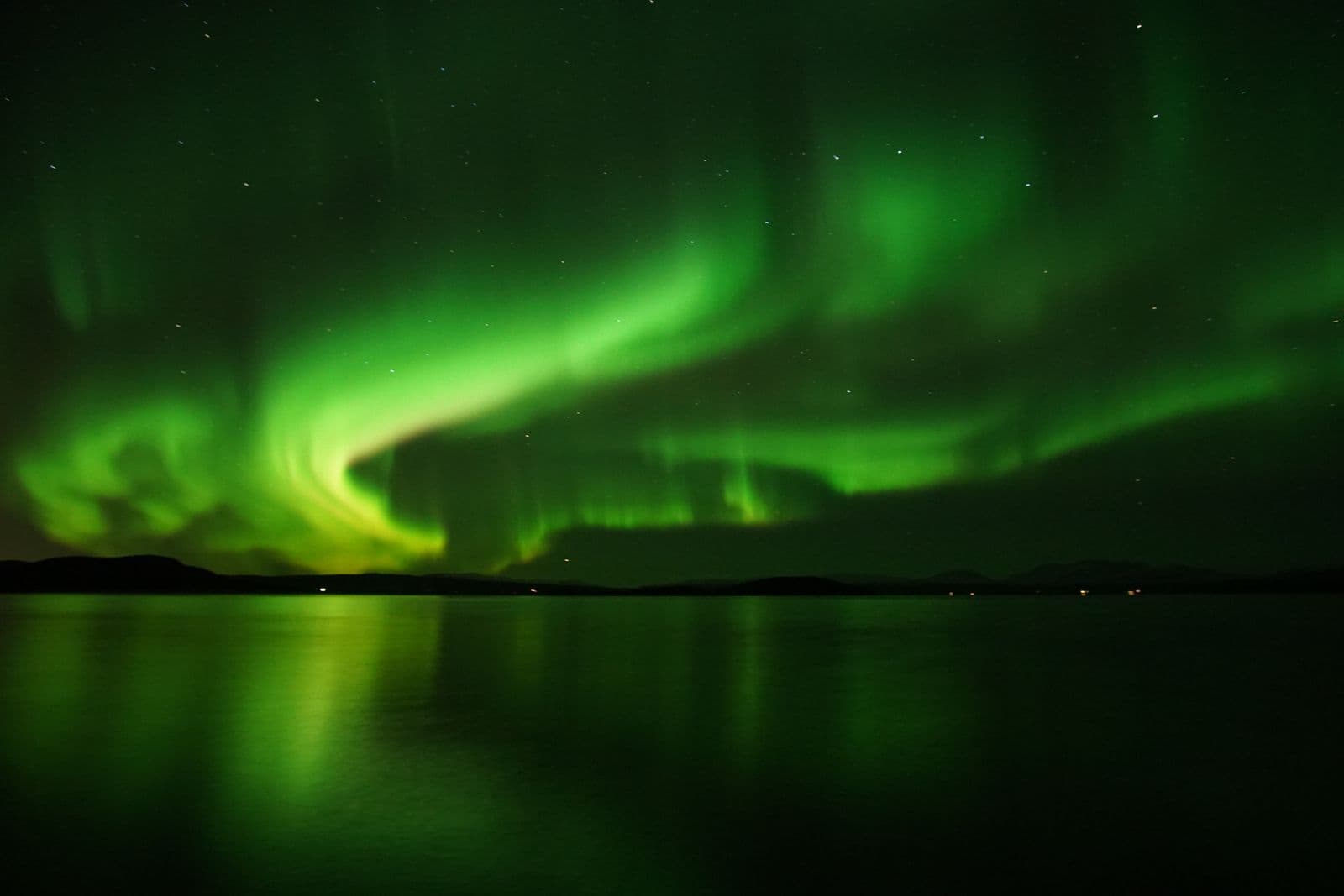 Northern Lights
How to Read the Northern Lights Forecast in Iceland
Aurora activity, cloud cover and darkness all matter. Learn how to read the northern lights forecast in Iceland, what the numbers mean and how to plan around them.
Read more