
 Manage booking
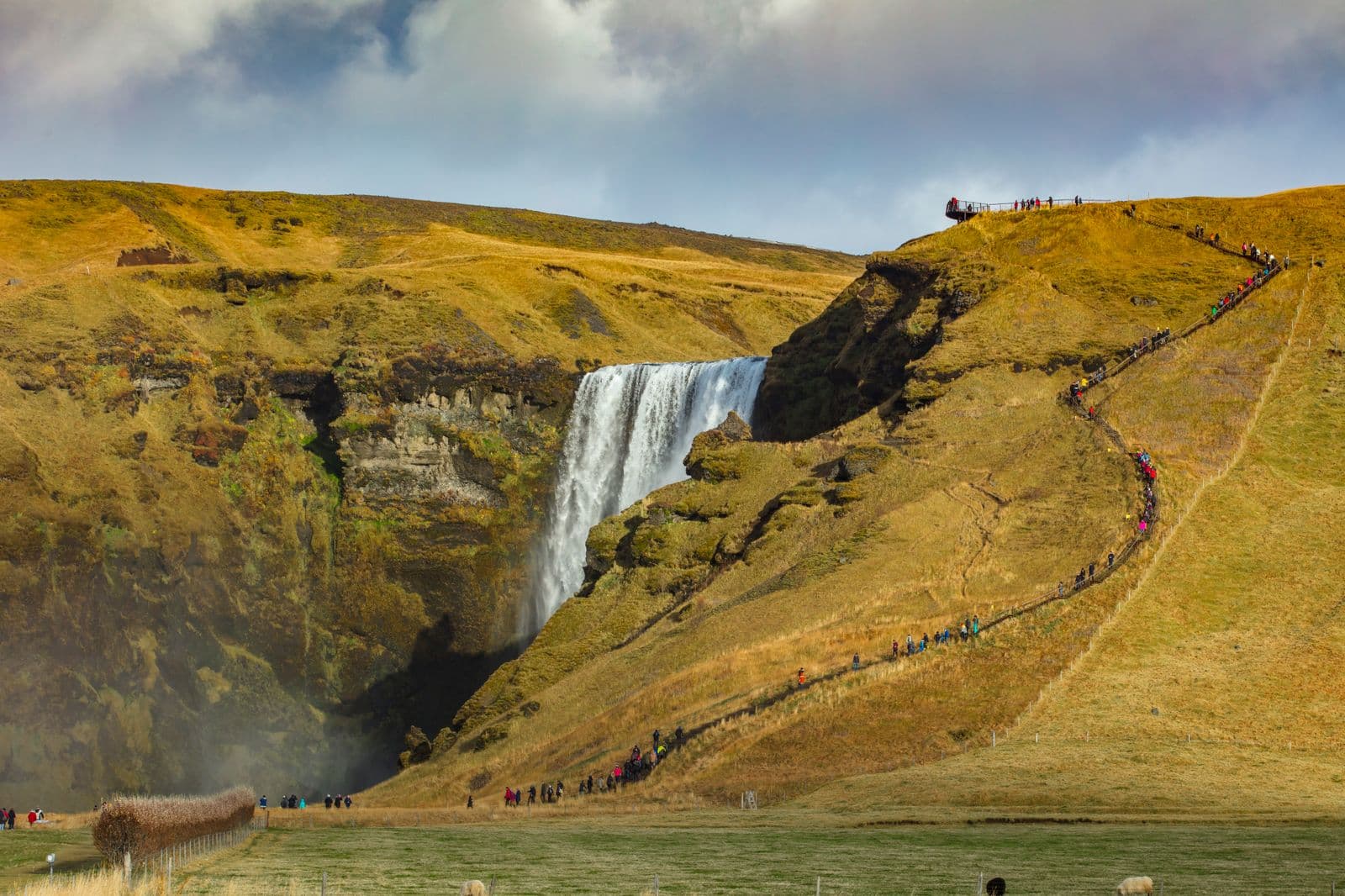

South Coast & Vík
Seljalandsfoss · Skógafoss · Reynisfjara · Vík

Car
1–4 people
120,000 kr
Van
5–7 people
142,000 kr


Drive Reykjavik team · 6 min read · October 2026
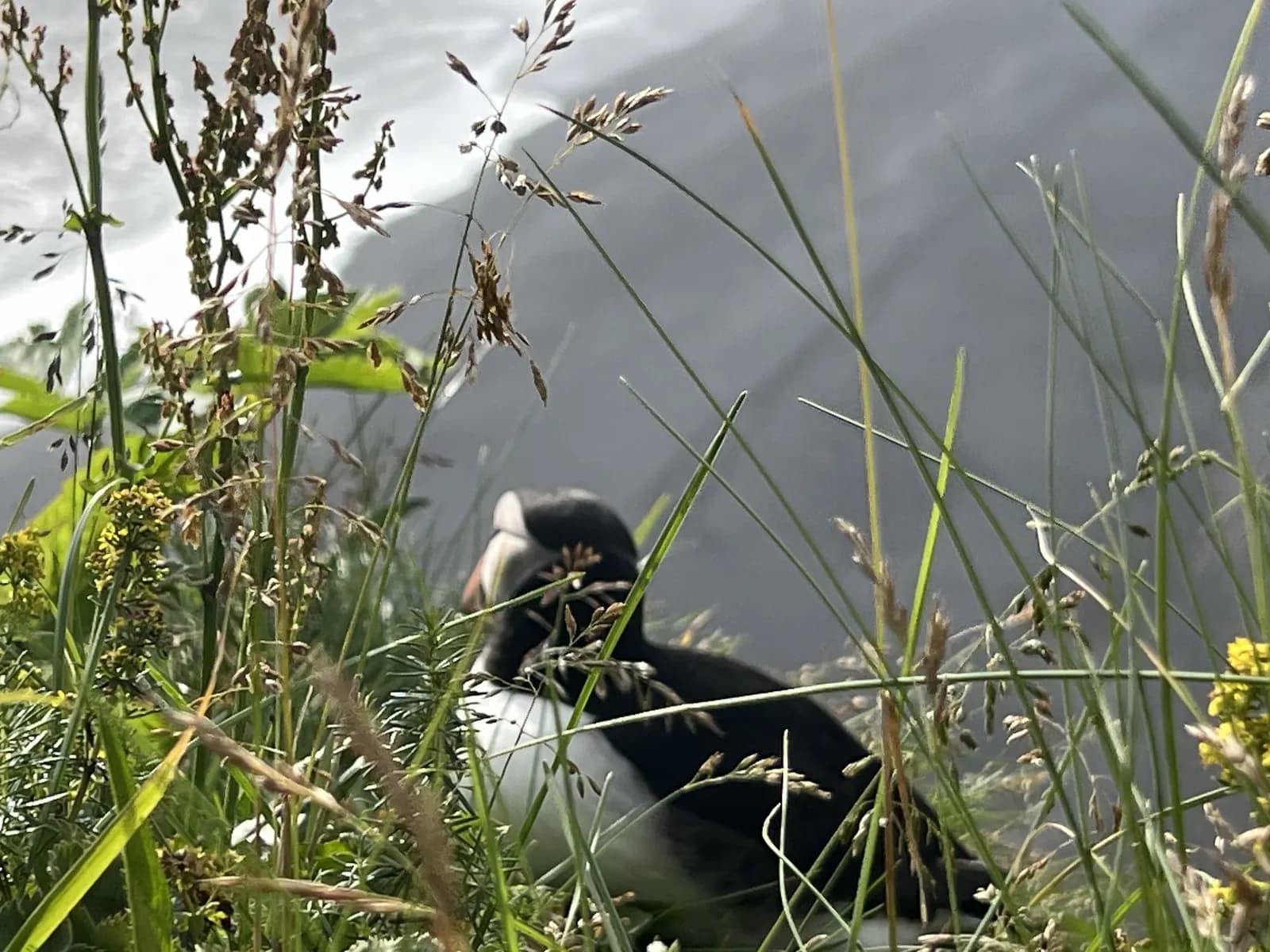
The Atlantic puffin, lundi in Icelandic, spends most of its life far out at sea. For a few months each summer it comes ashore to nest in burrows on grassy sea cliffs, and Iceland hosts a large share of the world's population. With an orange beak, orange feet and a slightly worried expression, it is the bird most visitors hope to see.
Puffins arrive at the colonies from late April and May and leave again around mid-August. June and July are the most reliable months. By September the cliffs are empty, and from autumn to spring you will not see puffins on land in Iceland at all.
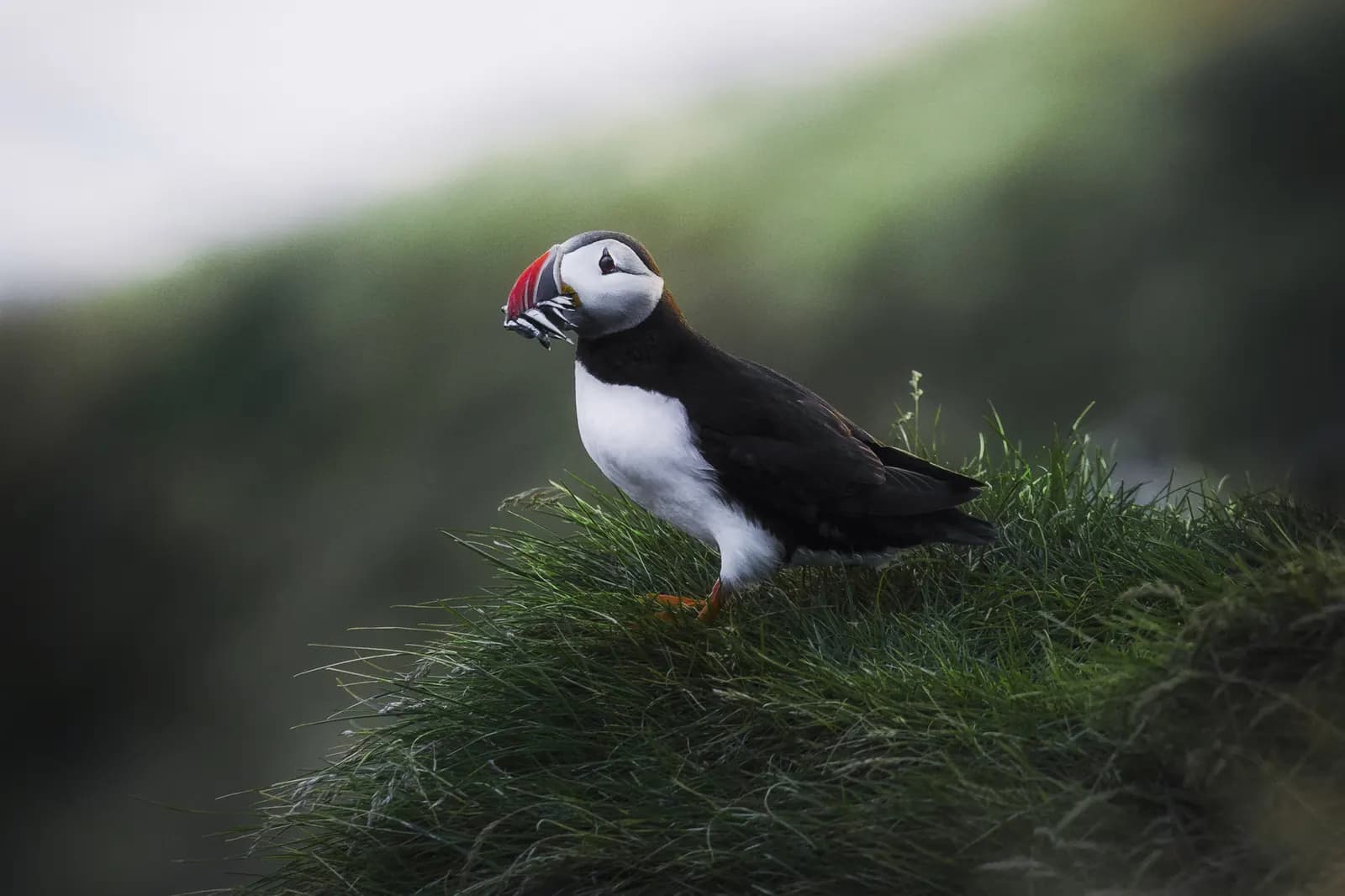
Distances and times are approximate. The far colonies are best visited as part of a longer trip around the country.
If you are staying in Reykjavík, the simplest plan is a day on the South Coast in June or July with a stop at Dyrhólaey or the cliffs near Vík. You see the Seljalandsfoss and Skógafoss waterfalls and the black beach at Reynisfjara on the same day. See our South Coast day trip guide and our Vík travel guide.
For the Westman Islands, our Herjólfur ferry guide explains the crossing and how to reach the harbour.
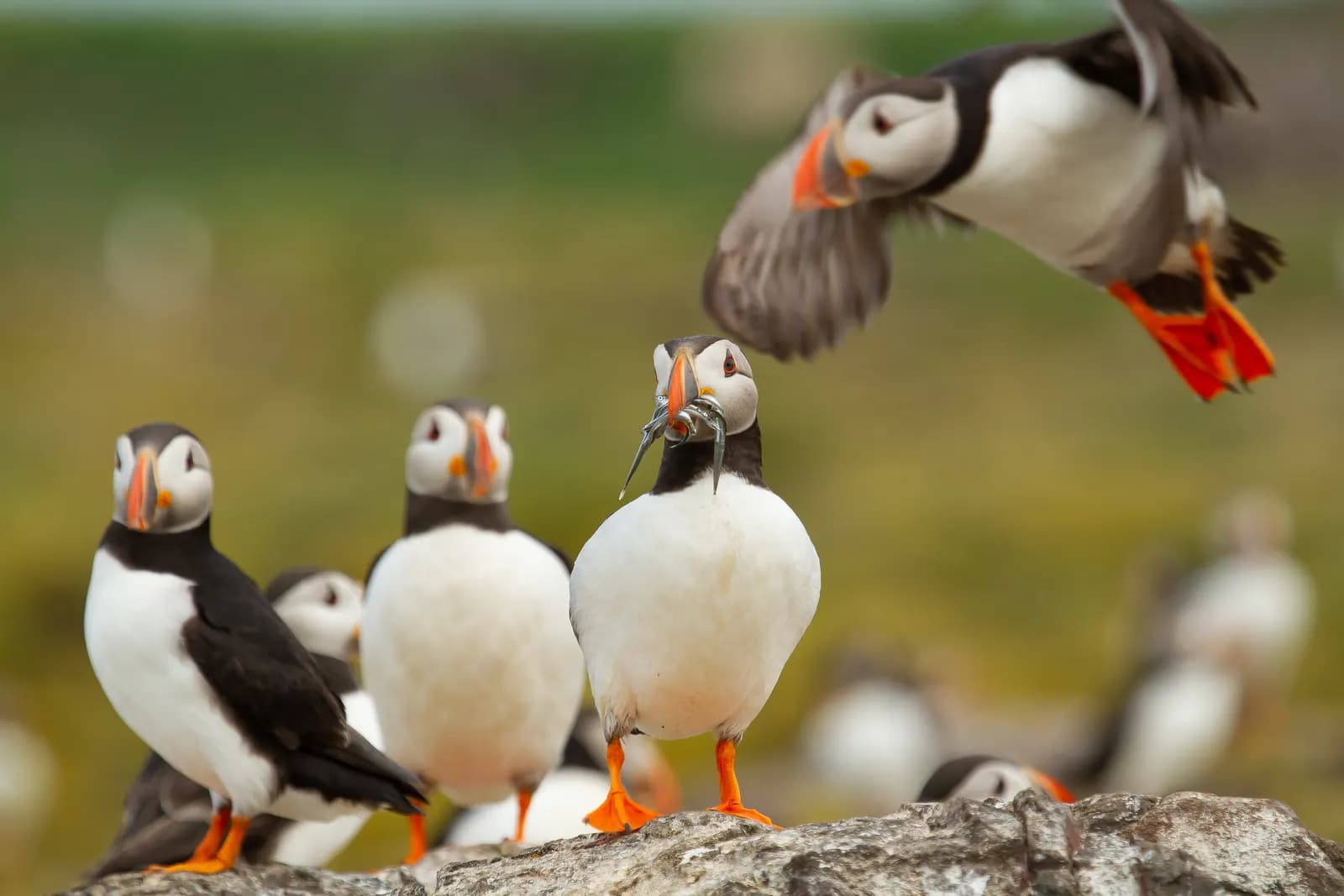
In late summer the young birds leave their burrows at night and head for the sea. On Heimaey, in the Westman Islands, some are confused by the lights of the town and land in the streets instead. Local children and families collect them in cardboard boxes, and release them at the shore the next day. It is a much-loved tradition, and visitors in August and early September sometimes see it happen.
The Atlantic puffin is classed as vulnerable, and numbers in Iceland have fallen over recent decades, mainly because the small fish the birds depend on have become harder to find in warmer seas. That is one more reason to watch from a distance and keep to the paths.
Wind on the cliff tops is strong even in summer. Bring a warm, windproof layer and hold on to hats and lens caps.
On our private South Coast tour you travel in your own car with a local driver and choose the stops. In the puffin season, tell us when you book that you would like time at Dyrhólaey or the cliffs near Vík, and we plan the day around it. We cannot promise birds on any given day, but after ten years of driving travellers around Iceland we know when and where the chances are best. For colonies further away, such as Borgarfjörður eystri or Látrabjarg, message us on WhatsApp at +354 777 3949: we go everywhere in the country.
Seljalandsfoss · Skógafoss · Reynisfjara · Vík
Car
1–4 people
120,000 kr
Van
5–7 people
142,000 kr
June and July. The birds arrive from late April and May and leave around mid-August.
Yes. In summer, short boat trips from the Old Harbour sail past islands in the bay where puffins nest. The closest colonies on land are on the South Coast near Vík.
No. Puffins spend the winter far out at sea and are not on land in Iceland from about September to April.
Evening and early morning, when most birds are back on the cliffs. In the middle of the day many are out fishing.
Stay behind the ropes and a few metres from the birds. Do not walk on the turf near the cliff edge, where the burrows are.
Lundi. A young puffin is called a puffling in English.
About three and a half months on land, from late April or May until around mid-August. They spend the rest of the year at sea.
In the Westman Islands (Vestmannaeyjar), off the south coast, reached by ferry from Landeyjahöfn.
The Atlantic puffin is classed as vulnerable and numbers in Iceland have declined. Watching from a distance and staying on marked paths helps protect the colonies.
Seljalandsfoss · Skógafoss · Reynisfjara · Vík
Car
1–4 people
120,000 kr
Van
5–7 people
142,000 kr
Travel tips
 Planning & practical tips
Do you need a car seat for your airport transfer in Iceland? What the rules require, which seat fits which age, whether to bring your own and how to book.
Read more Planning & practical tips
A practical packing list for Iceland: the layering system, waterproofs, footwear, swimwear and the extras that change by season, plus what you can leave at home.
Read more Planning & practical tips
Planning accessible travel in Iceland? How to prepare for the airport, transport, sights and weather, and what to ask any operator before you book.
Read more


