
 Manage booking
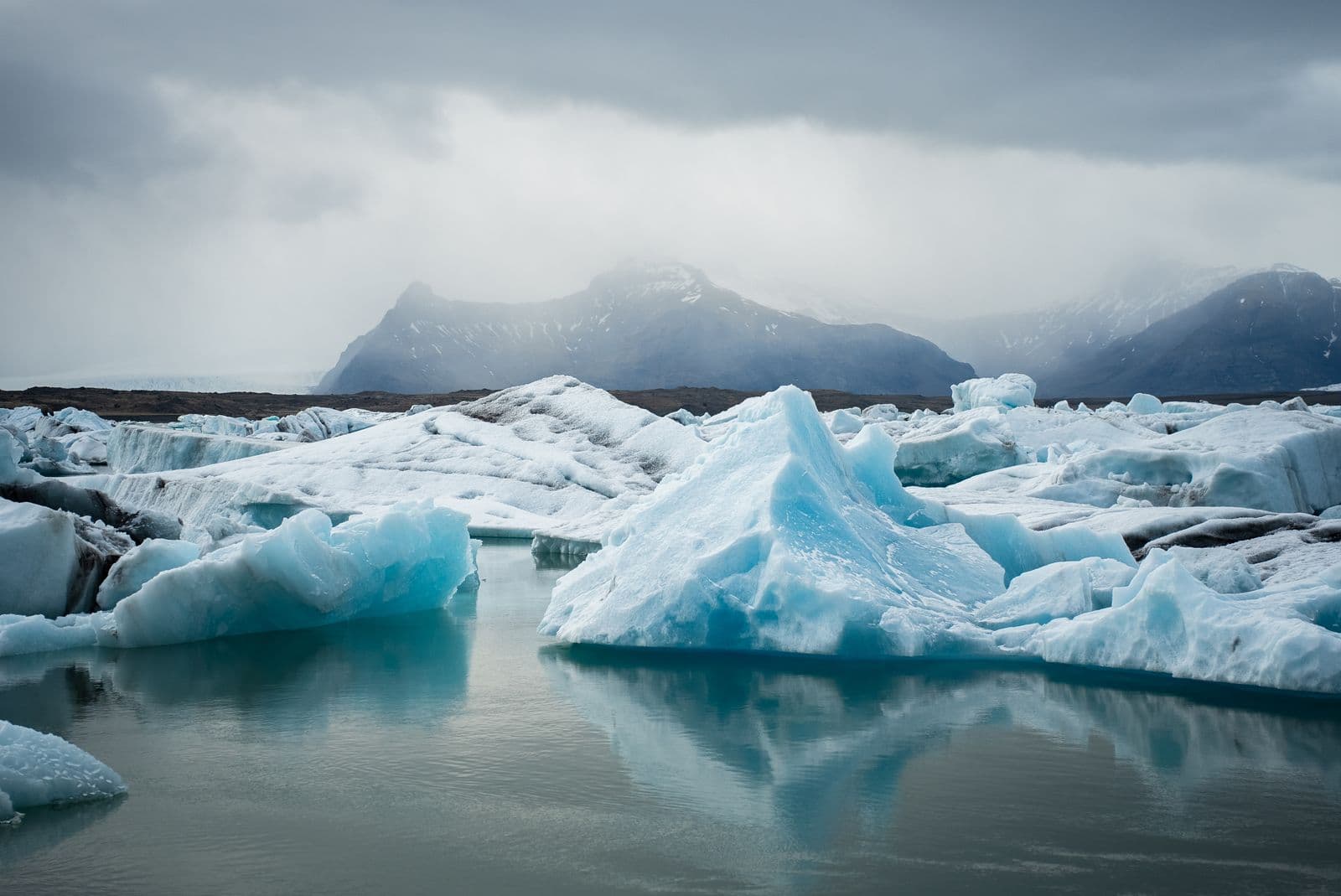

Jökulsárlón Glacier Lagoon
South Coast · Glacier lagoon · Diamond Beach

Car
1–4 people
170,000 kr
Van
5–7 people
On request


Drive Reykjavik team · 6 min read · October 2026
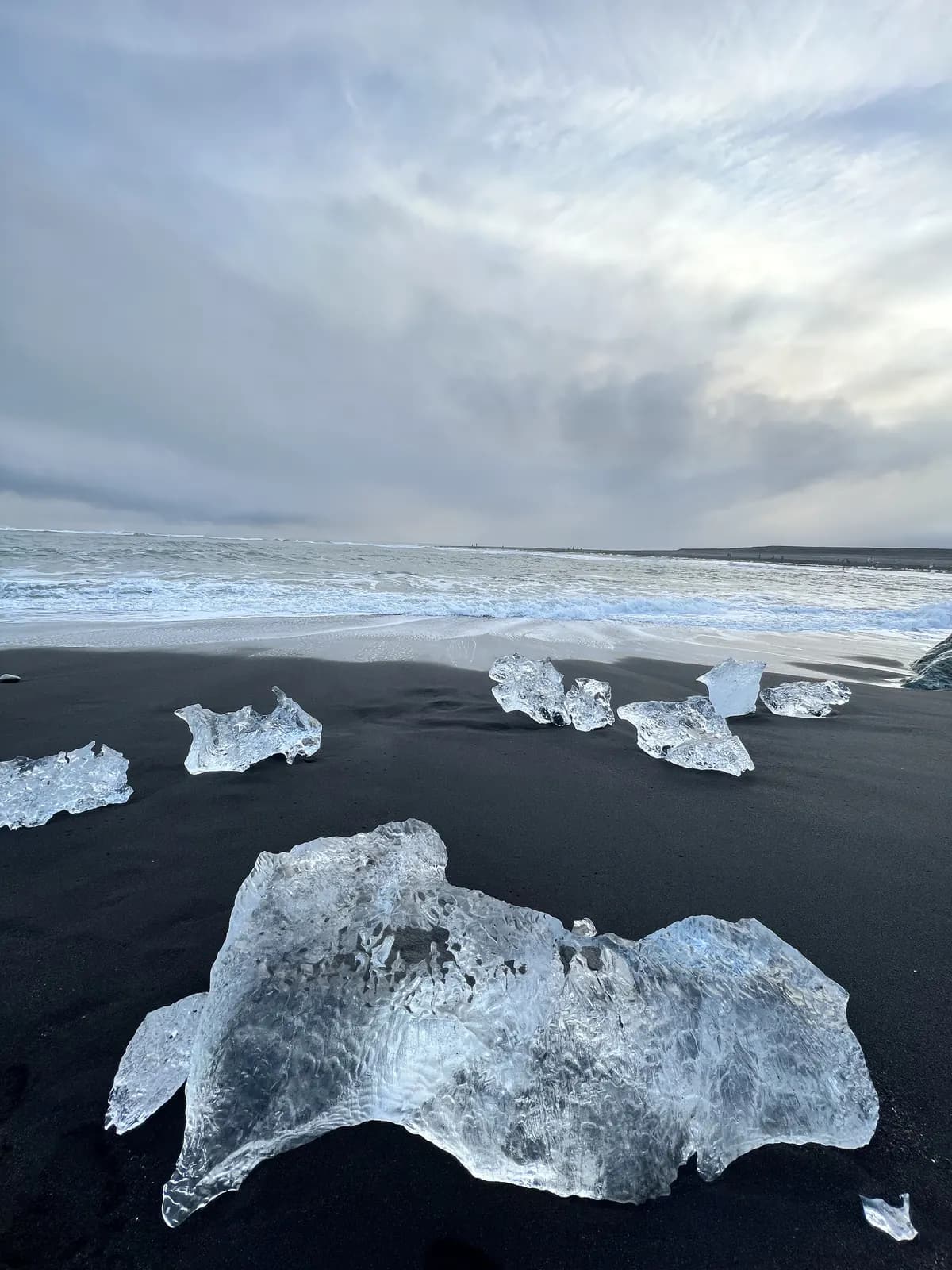
Diamond Beach is the name visitors have given to the black sand of Breiðamerkursandur, where the Jökulsárlón glacier lagoon meets the Atlantic. Pieces of ice, some as clear as glass and some milky blue, lie scattered along the shore and shine against the dark sand.
The beach is only a few minutes' walk from the lagoon, on the other side of the Ring Road bridge, so you can see both on the same stop.
The ice breaks off the glacier Breiðamerkurjökull, an outlet of Vatnajökull, and floats in the lagoon, sometimes for years. When the pieces are small enough, the tide carries them down a short river and out to sea. The waves then polish them and throw some back onto the sand.
How much ice you find changes from day to day. After some tides the beach is covered in it; on other days there are only a few pieces. Nobody can promise a full beach, which is part of why each visit looks different.
The river from the lagoon splits the beach in two, and there is a car park on each side of the bridge. Wind and current decide where the ice lands, so one side can be full while the other is almost empty. If you see little ice from the first car park, cross the bridge and look at the other side before you give up.
Diamond Beach is open all year. Sunrise and sunset give the warmest light, when the ice glows orange and pink, and in winter those hours fall conveniently in the late morning and afternoon. In summer the midnight sun gives long, soft evenings. On clear winter nights the area is also a well-known place to look for northern lights, which can never be guaranteed.
Dress for wind and spray even on a calm day, with waterproof shoes. The ice belongs to the national park, so look and photograph but leave it where it is.
The beach is exposed, and wind off the glacier makes it feel colder than the forecast suggests. Wear a windproof and waterproof outer layer, a hat and gloves, and waterproof shoes or boots. A café and toilets are found at the lagoon car park, with opening hours that vary by season. There is nothing else for a long way in either direction, so keep fuel in the tank.
Diamond Beach is on the Ring Road in South-East Iceland, about 370 km from Reykjavík, which is roughly five hours of driving each way without stops. There are car parks on both sides of the bridge, and a parking fee applies in the area. Distances and times are approximate.
As a day trip from Reykjavík it is a very long day, usually 13 to 14 hours with stops at the South Coast waterfalls and Vík on the way. Many travellers prefer to stay a night nearby. Our Jökulsárlón day trip guide describes the route in detail.
Times are approximate and depend on the season, the weather and how long you like to stay. In mid-winter there are only a few hours of daylight, so the stops on the way are shorter.
Boat trips on the lagoon run roughly from spring to autumn and are booked with the local operators. Fjallsárlón, a smaller and quieter glacier lagoon, is about ten minutes west. Seals are often seen in the lagoon and near the river mouth.
Our private Jökulsárlón Glacier Lagoon tour leaves from your hotel in Reykjavík and includes time at both the lagoon and Diamond Beach, with stops on the South Coast along the way. You travel in your own car with a local driver and decide how long to stay at each place. We have been driving travellers around Iceland for ten years, and we go everywhere in the country.
South Coast · Glacier lagoon · Diamond Beach
Car
1–4 people
170,000 kr
Van
5–7 people
On request
On the Ring Road in South-East Iceland, directly across the road from Jökulsárlón glacier lagoon, about 370 km from Reykjavík.
Usually some, but the amount changes with the tides, wind and how much ice is leaving the lagoon. It cannot be promised.
Yes, but it is a very long day of around 13 to 14 hours. Staying a night in the area makes it more relaxed.
There is no entrance fee, but a parking fee applies at the car parks by the lagoon and the beach.
You can touch ice lying on dry sand, but do not climb on ice in or near the water. Waves can roll it or pull it out to sea.
About 30 to 60 minutes on the beach, and a similar time at the glacier lagoon across the road.
It is worth visiting all year. Winter brings low golden light and a chance of northern lights; summer brings long days and boat trips on the lagoon.
On clear, dark nights between about September and April it is possible, but the northern lights can never be guaranteed.
Because the pieces of clear glacier ice on the black sand shine like diamonds. The local name is Breiðamerkursandur.
South Coast · Glacier lagoon · Diamond Beach
Car
1–4 people
170,000 kr
Van
5–7 people
On request
Travel tips
 Places to visit
Dettifoss is often called the most powerful waterfall in Europe, and Selfoss is a short walk upstream. Which side to choose, how long to allow and when the roads are open.
Read more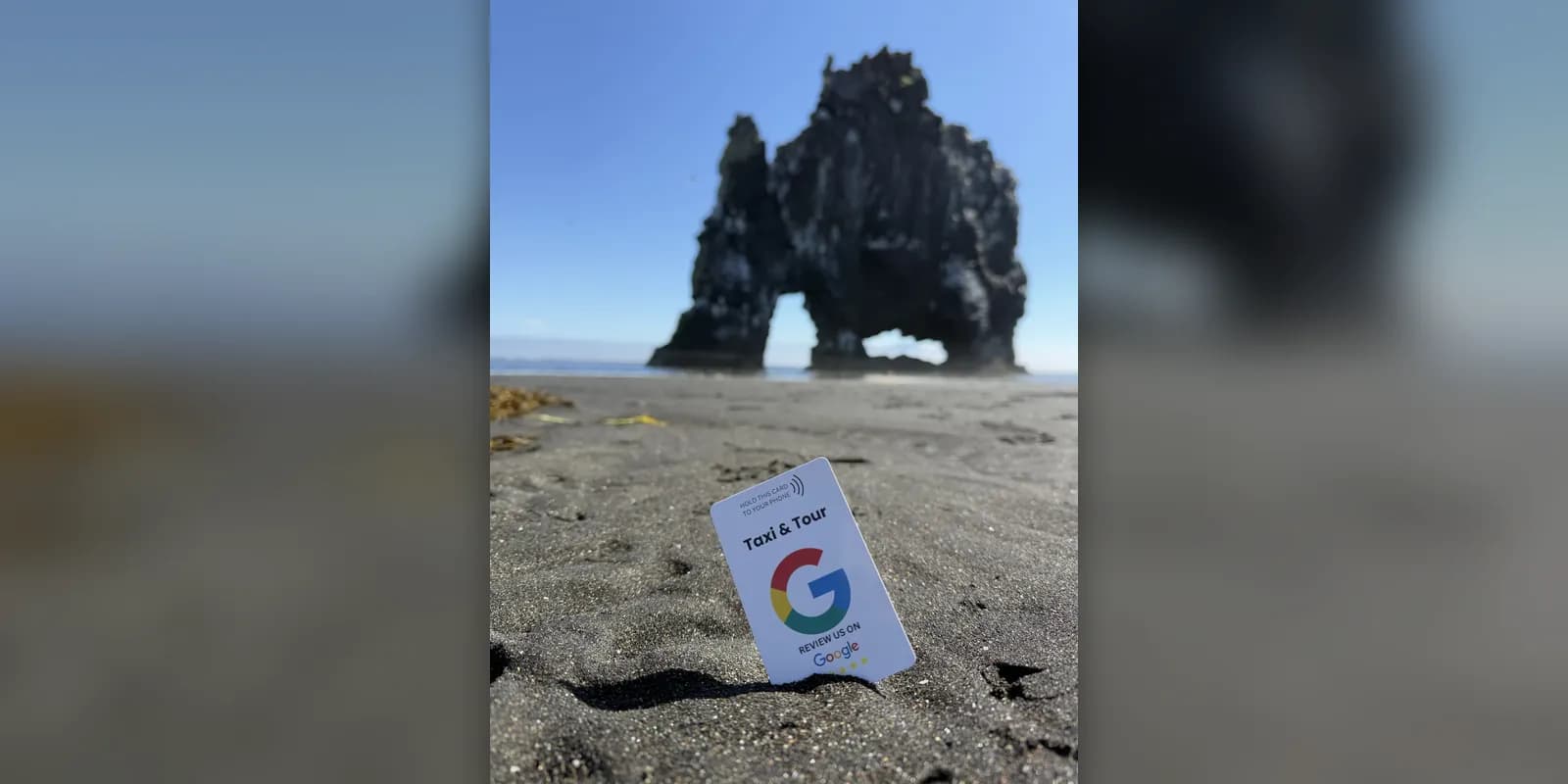 Places to visit
Hvítserkur is a 15-metre basalt sea stack on the Vatnsnes peninsula that looks like an animal drinking from the sea. How to get there, when to go and what else to see nearby.
Read more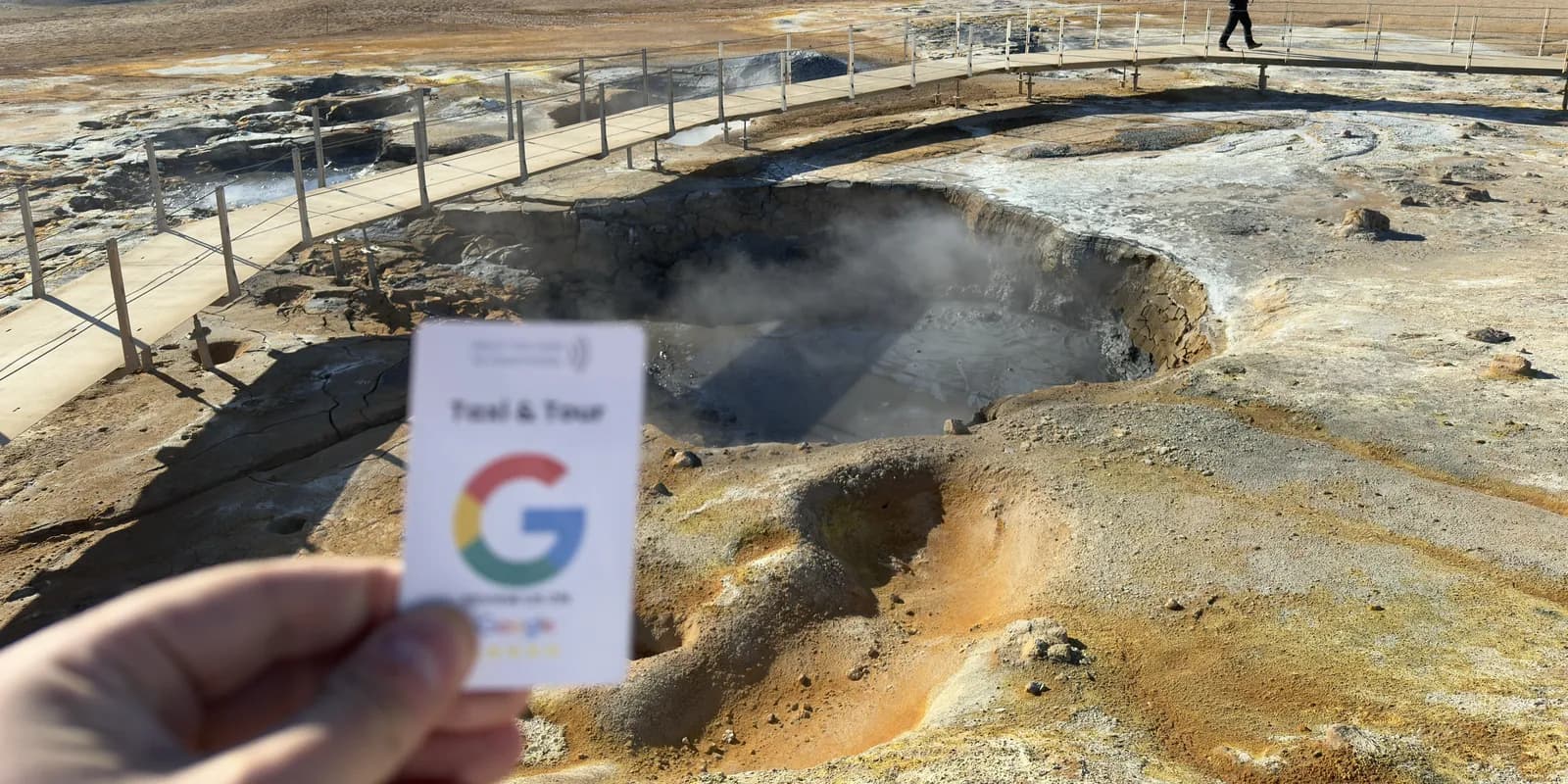 Places to visit
Hverir is a field of boiling mud pools and hissing steam vents beside the Ring Road near Lake Mývatn. What to expect, how to stay safe and how long to allow.
Read more


