


 Manage booking
Keflavík Airport to Ísafjörður and the Westfjords: drive, fly or private transfer?

Drive Reykjavik team · 11 min read · September 2026
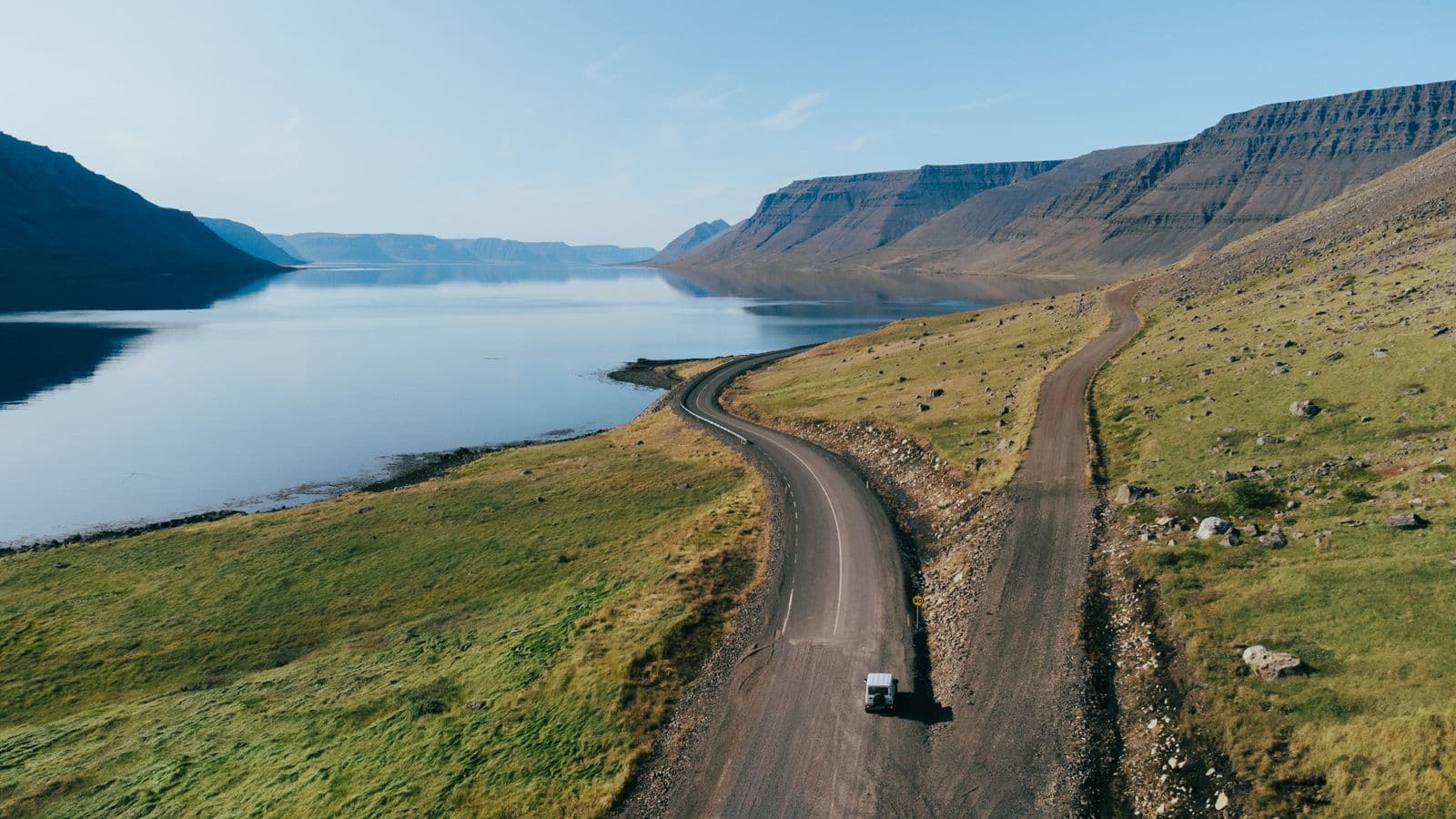
Most visitors to Iceland never make it to the Westfjords, and that is exactly why the ones who do tend to fall for them. Deep fjords, flat-topped mountains, tiny fishing villages and very little traffic make this corner of the country feel like a different Iceland. The catch is distance. Ísafjörður, the largest town in the region, is a long way from Keflavík Airport, and the trip needs more planning than a ride into Reykjavík.
There are three realistic ways to cover that distance: a domestic flight from Reykjavík, driving yourself, or a private transfer that takes you door to door. Each has a place. This guide explains how they work, what to watch out for, and how to choose based on your group, your luggage and the season.
Where Ísafjörður is, and why the trip takes planning
Ísafjörður sits on a curved gravel spit in Skutulsfjörður, a side fjord of the long Ísafjarðardjúp in the north of the Westfjords. Steep mountains rise on almost every side of the town. It has shops, restaurants, a harbour, a small domestic airport and the Westfjords Heritage Museum in some of the oldest timber buildings in Iceland.
Keflavík Airport is on the Reykjanes peninsula in the far south-west. To reach the Westfjords by road you first drive through the Reykjavík area, then north past Borgarnes, over the Holtavörðuheiði mountain pass and into a region where the road follows the shoreline in and out of one fjord after another. On the map the distance looks manageable; on the road the fjords add many kilometres. From Reykjavík, the drive to Ísafjörður is roughly 450 km, and from the airport it is longer again.
- Distance: well over 450 km from Keflavík Airport by the usual northern route
- Driving time: most of a day, before stops for meals and rest
- Roads: paved on the main route, with mountain passes and long, quiet stretches
- Season: summer is straightforward; winter needs flexibility because passes can close in storms
That is why most travellers think twice before deciding how to get there. The right answer depends less on the map and more on how many of you there are, how much you are carrying and how much of the scenery you want to see on the way.
Option 1: fly from Reykjavík to Ísafjörður
Ísafjörður has a domestic airport, and there are scheduled flights from Reykjavík's domestic airport in the city centre. The flight itself is short, well under an hour, and the approach between the mountains of the fjord is one of the most spectacular landings in the country.
How the flight option works from Keflavík
International flights land at Keflavík, not at the domestic airport. So if you choose to fly, your journey has three parts: Keflavík Airport to Reykjavík's domestic airport (about 50 km), the domestic flight, and the short ride from Ísafjörður airport into town. Allow plenty of time between landing at Keflavík and your domestic departure, because passport control, baggage and the drive into Reykjavík all take time. Many travellers spend a night in Reykjavík and fly the next day.
We can take you straight from Keflavík arrivals to the domestic airport with a private transfer to Reykjavík domestic airport. Our guide to Reykjavík's domestic airport explains how that airport works.
Pros and cons of flying
- Pro: the quickest way to cover the distance once you are in Reykjavík
- Pro: a memorable view of the fjords from the air
- Con: flights into Ísafjörður depend on visibility and wind, so delays and cancellations are possible, especially outside summer
- Con: check the baggage allowance for domestic flights, particularly for bulky items such as skis or bikes
- Con: you still need transport at both ends, and a car or tour once you arrive
Option 2: drive yourself
Renting a car at Keflavík and driving north gives you full freedom, and many visitors combine the Westfjords with West Iceland or the Snæfellsnes peninsula. It is a beautiful drive, but it is long, and after an overnight flight it is not something to attempt on the day you land.
The northern route via Hólmavík
The usual year-round route goes from Reykjavík through the Hvalfjörður tunnel, past Borgarnes and over Holtavörðuheiði, then along Hrútafjörður to Hólmavík, the main village of the Strandir coast. From there the road climbs over the Steingrímsfjarðarheiði plateau and drops into Ísafjarðardjúp, where it winds around a long series of fjords before reaching Ísafjörður. The last part is slow but very scenic, with seals and seabirds along the shore if you are lucky.
The southern route via Dynjandi
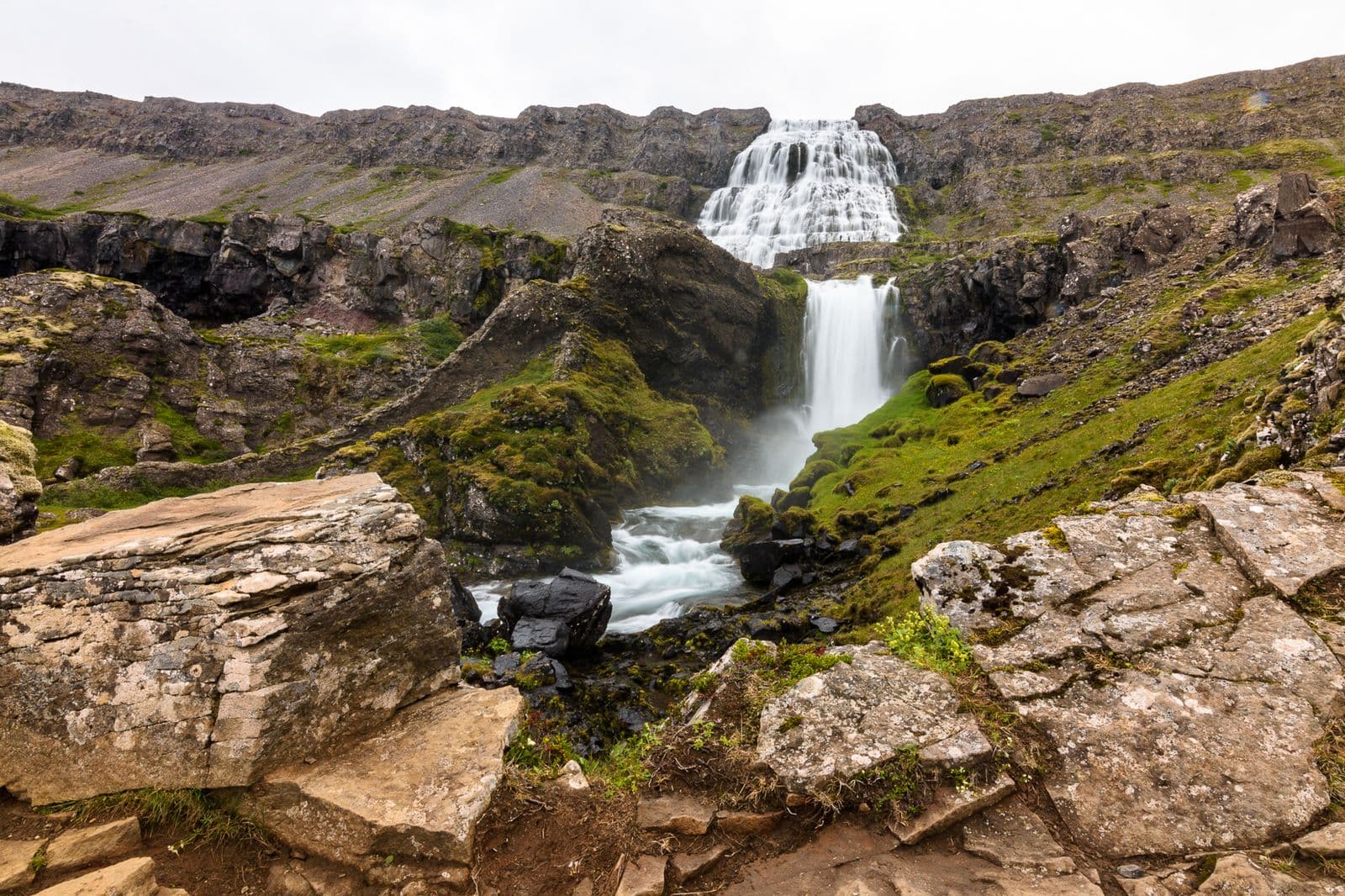
The other way in follows the south coast of the Westfjords and then crosses towards Arnarfjörður, passing Dynjandi, the region's best-known waterfall, before heading north through the Dýrafjörður tunnel towards Ísafjörður. It is the more scenic choice in summer. The high plateau of Dynjandisheiði on this route can be difficult or closed in winter, so check road conditions before you rely on it.
Some drivers shorten the southern route with the Baldur car ferry across Breiðafjörður, from Stykkishólmur on Snæfellsnes to Brjánslækur in the southern Westfjords. Check the ferry company's current timetable and book ahead in summer.
Things to know before you drive
- Fuel stations and shops are far apart in places; fill up when you can
- Many fjord roads are narrow, with single-lane bridges and sharp bends
- Check road conditions and weather every morning on the official road and weather services
- Sheep wander onto the roads in summer, so keep your speed down
- In winter, only drive if you are confident on snow and ice, and read our guide to driving in Iceland in winter
Option 3: a private transfer, door to door
A private transfer is the simplest way to travel from Keflavík Airport to Ísafjörður in one vehicle, with all your luggage, and without driving yourself after a long flight. It is a long ride, so it suits travellers who want to see the country on the way rather than fly over it, families with lots of bags, and groups who would otherwise need several flights and rental cars.
- Fixed price per vehicle, not per person: a Tesla or similar for 1–4 passengers, or a Mercedes Vito van for 5–7
- The same price day and night, from Keflavík Airport or from Reykjavík
- Your driver meets you in the arrivals hall with a name sign
- Your driver checks your landing time from your flight number, and 45 minutes of waiting are free
- Stops on the way, for a meal or a viewpoint, if you agree them with us in advance
- Child seats free on request, and you pay the driver by card or cash
- Free cancellation up to 24 hours before pick-up
We also drive to other towns in the region: see the routes to Hólmavík, Flateyri and Patreksfjörður. For 8–16 people we can arrange a minibus on request; message us on WhatsApp at +354 777 3949, any time, with your dates and group size. Our guide to travelling in Iceland as a group has more ideas.
Breaking up the journey: stops worth making
Whether you drive or travel with a driver, the road to Ísafjörður is too long to do without breaks. These are natural places to stop on the northern route.
- Borgarnes: about an hour from Reykjavík, with cafés and the Settlement Centre. Our West Iceland guide covers the area.
- Holtavörðuheiði: the high moorland between West and North Iceland, wide and empty, with big views in clear weather.
- Hólmavík: a small harbour village on Steingrímsfjörður and a good place for a meal. It is home to the Museum of Icelandic Sorcery and Witchcraft.
- Ísafjarðardjúp: the long fjord system before Ísafjörður, with viewpoints, old farms and wildlife along the shore.
If you are travelling with us, tell us which stops you would like when you book, so that we can plan the day and give you a realistic arrival time.
What to do once you are in the Westfjords
Ísafjörður makes a good base. Take a walk around the old centre, visit the Westfjords Heritage Museum and eat fish by the harbour. From there, these are some of the highlights of the region.
- Bolungarvík, a fishing village a short drive north of Ísafjörður, with a reconstructed fishing station at Ósvör
- Flateyri, Suðureyri and Þingeyri, small villages in the neighbouring fjords, each with its own character
- Vigur, a small island in Ísafjarðardjúp known for its birdlife, reached by boat in summer
- Hornstrandir, a nature reserve with no roads and no permanent residents, reached by boat from Ísafjörður in summer, for hikers who are well prepared
- Dynjandi, the tall, stepped waterfall in Arnarfjörður
- Rauðasandur and Látrabjarg in the south-west of the region: a wide red-golden beach and a huge bird cliff at the western tip of Iceland
Distances between these places are long, and many tours run only in summer. Check boat and tour schedules with the operators in advance, especially for Vigur and Hornstrandir.
Seasons and weather
Summer (June to August) is the easiest time to visit. Days are very long, roads are open, boats run to the islands and the nature reserve, and the scenery is green. It is also the busiest season for flights and accommodation, so book early.
Spring and autumn are quieter, with fewer services. Snow can arrive early or linger late on the mountain passes, so keep an eye on the forecast. Our weather guide shows what to expect month by month.
Winter in the Westfjords is beautiful but demanding. Daylight is very short in December and January, the mountain passes can be snowy, icy and windy, and roads can close for a while during storms. Flights can be cancelled in poor visibility. If you are travelling with us in winter, we watch the forecast and road conditions and will contact you if the time or date needs to change.
Which option suits you?
There is no single best way to reach Ísafjörður. Here is a quick way to decide.
- Fly if you are travelling light, have little time and are happy to spend a night in Reykjavík first.
- Drive yourself if you want to explore the whole region for several days, you are comfortable on long, quiet roads and you are not driving straight after an overnight flight.
- Take a private transfer if you want to go straight from the airport to your accommodation in one vehicle, you are a family or group with luggage, or you would rather enjoy the views than watch the road.
Many visitors mix the options: for example, fly in and travel back by road with stops, or take a transfer to Ísafjörður and rent a car locally for a few days. If you are planning a longer loop, our Ring Road planning guide and our guide to getting around Iceland without a car are useful next reads.
Frequently asked questions
Well over 450 km by the usual northern route through Reykjavík, Borgarnes and Hólmavík. Without stops it takes most of a day; with meal breaks it is a full day.
Not directly. Domestic flights to Ísafjörður leave from Reykjavík's domestic airport in the city, so you first need to get from Keflavík to Reykjavík, about 50 km away.
Flying is quicker but depends on the weather, and you still need transport at both ends. Driving lets you see the fjords on the way but takes a full day. A private transfer is door to door and suits families and groups with luggage.
The main northern route is kept open as far as possible, but mountain passes can be snowy and icy and may close for a while in storms. Check road conditions every day and keep your plans flexible.
Yes. Stops for a meal or a viewpoint are possible if you agree them with us in advance, so we can plan the timing of the day.
Our van seats up to 7 passengers. For 8–16 people we can arrange a minibus on request; message us on WhatsApp at +354 777 3949 with your dates and group size.
Highlights include the old centre of Ísafjörður, Dynjandi waterfall, the fishing villages in the fjords, the island of Vigur, the Hornstrandir nature reserve, Rauðasandur beach and the Látrabjarg bird cliff.
Travel tips
More in Getting around Iceland


 Getting around Iceland
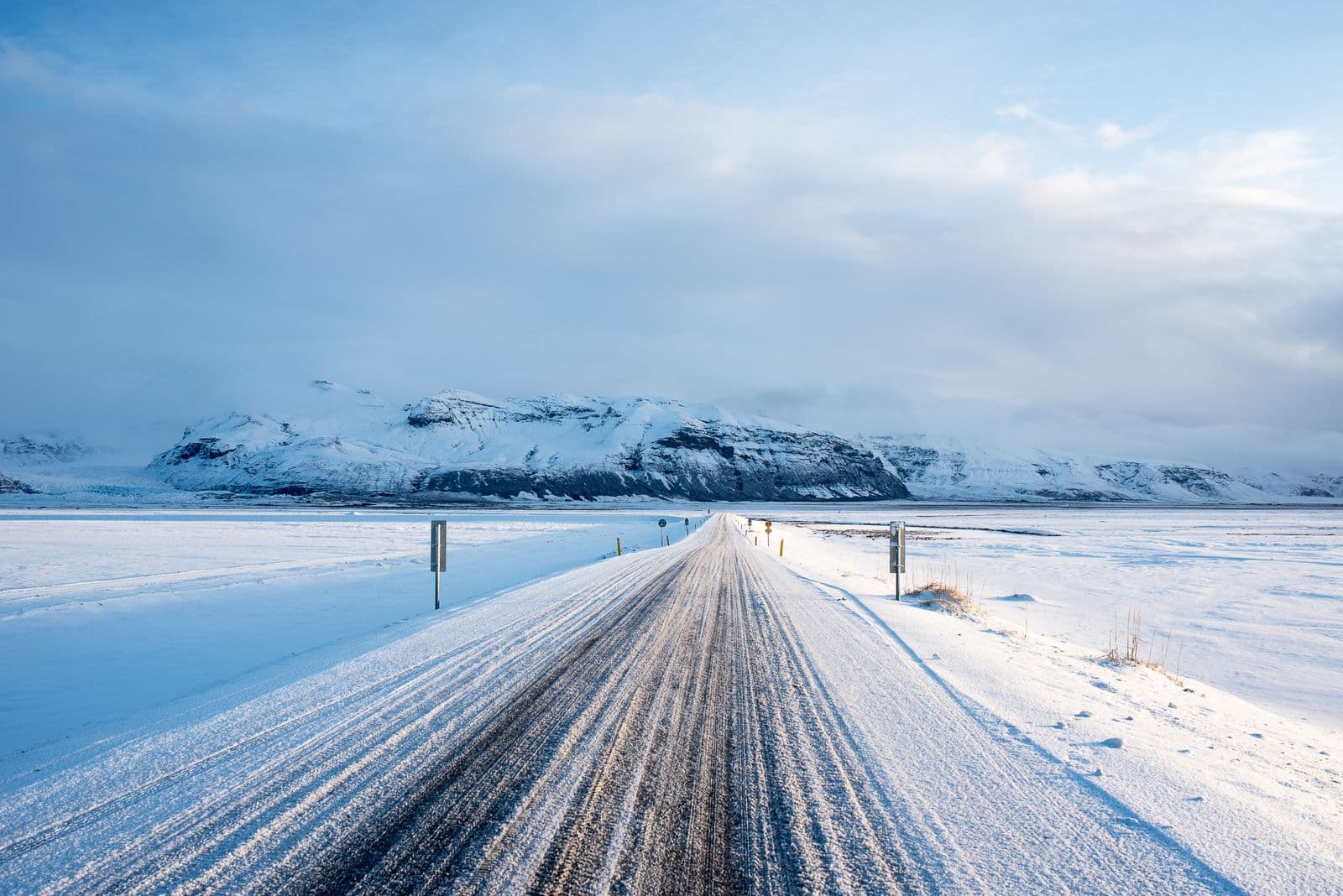
Driving in Iceland in Winter: Is It Safe, and When to Get a Driver
Thinking of driving in Iceland in winter? Here is an honest look at snow, ice, wind and short daylight, the checks that matter and when hiring a driver is the smarter choice.
Read more Getting around Iceland
Taxis in Iceland: Prices, Apps and When a Pre-booked Transfer Is Better
How taxis work in Iceland: how fares are charged, how to order one, what to expect from the airport and when a fixed-price pre-booked transfer is the better choice.
Read more Getting around Iceland
Getting Around Iceland Without Renting a Car
You do not need a rental car to see Iceland. Compare buses, domestic flights, tours, taxis and private drivers, and see which option fits each type of trip.
Read more